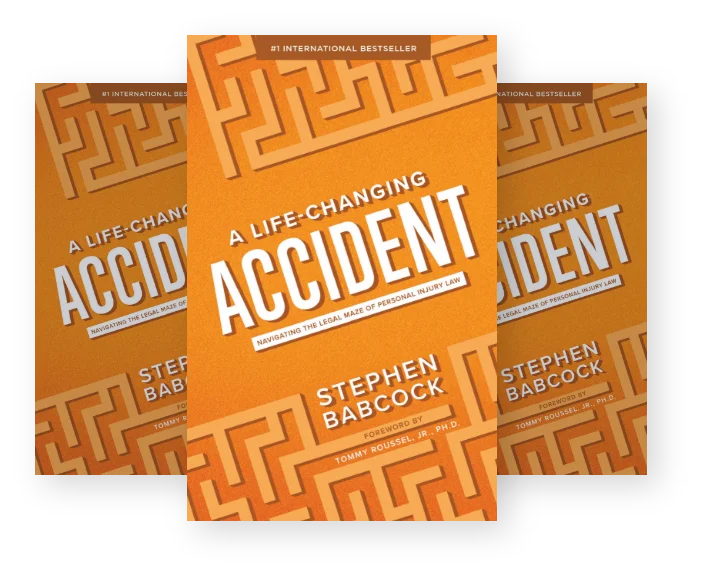
Detailed Chapter Breakdown
MY OPENING STATEMENT
Stephen Babcock introduces himself and shares his journey from defending insurance companies to becoming an advocate for injury victims. This chapter sets the tone for the book, highlighting his mission to educate and empower readers facing personal injury cases.
CHAPTER 1: ON THE WRONG SIDE OF THE LAW
Stephen Babcock introduces himself and shares his journey from defending insurance companies to becoming an advocate for injury victims. This chapter sets the tone for the book, highlighting his mission to educate and empower readers facing personal injury cases.
CHAPTER 2: A COSTLY MYTH – THE “FRIVOLOUS” LAWSUIT
Dispelling the myth of the “frivolous lawsuit,” this chapter reveals how public opinion is shaped to protect corporate interests at the expense of victims’ rights. Stephen explains how tort reform has affected individuals’ options for fair compensation.
CHAPTER 3: CRASHES, DOG BITES, AND BURNS (OH, MY!): COMMON TYPES OF PERSONAL INJURY CASES
This chapter explores different types of personal injury claims, from vehicular accidents to dog bites and workers’ compensation. Each section provides practical insights into what qualifies as a personal injury case and what victims can expect.
CHAPTER 4: DO I HAVE A CASE?
Babcock helps readers assess their potential claims, explaining the elements needed for a strong case. He also warns of actions to avoid that could jeopardize a case, such as waiting too long to seek medical treatment.
CHAPTER 5: WHO’S TO BLAME? DETERMINING LIABILITY
Stephen discusses the difference between liability and negligence, providing clear examples of how to establish responsibility for an injury and gather the evidence needed for a strong case.
CHAPTER 6: PROVING CAUSATION
Even when negligence is evident, linking it directly to an injury can be complex. This chapter explains how to prove causation through concepts like “cause in fact” and “proximate cause,” helping readers understand the importance of direct evidence.
CHAPTER 7: CALCULATING DAMAGES
From medical bills to punitive damages, Stephen explains the types of compensation available and how courts calculate financial recovery. This chapter provides a detailed overview of factors that influence compensation.
CHAPTER 8: THE IMPORTANCE OF SEEKING IMMEDIATE MEDICAL TREATMENT
This chapter emphasizes the importance of prompt medical care for the reader’s health and building a robust legal case should one be brought. Stephen highlights how insurance companies use treatment delays and gaps in treatment against victims and explains why medical records are crucial evidence.
CHAPTER 9: FINDING A HAPPY MEDIATION
Many personal injury cases are resolved through mediation. This chapter explains the process, including what to expect and why mediation can lead to a favorable settlement without the need for a trial.
CHAPTER 10: HOW LONG A PERSONAL INJURY CASE TAKES
Personal injury cases can take time. This chapter outlines the factors that influence timelines and explains the importance of patience, helping readers set realistic expectations about the process.
CHAPTER 11: FROM CRASH TO COMPENSATION: HOW A PERSONAL INJURY CASE PROCEEDS
Stephen provides a personal injury case roadmap detailing each phase from the initial accident to settlement negotiations. This chapter gives readers a sense of control over the journey to fair compensation.
CHAPTER 12: YOUR DAY IN COURT – WHAT TO EXPECT IF YOUR CASE GOES TO TRIAL
For cases that proceed to court, Stephen explains what to expect in a trial, including the roles of judges and juries and the process from opening statements to final verdicts. This chapter prepares readers for the courtroom experience and possible outcomes.