

If you were hurt in a West Monroe car accident, the insurance company may ask for a recorded statement or offer a quick settlement before you know the full extent of your injuries. You do not have to make those decisions alone. As part of our West Monroe personal injury practice, Babcock Injury Lawyers represents injured drivers, passengers, pedestrians, and families throughout West Monroe and Ouachita Parish. We investigate fault, identify the insurance policies that may apply, document the losses caused by the crash, and deal directly with the insurers.
We serve West Monroe from our Ruston office, roughly 30 miles west on I-20, and we can begin reviewing your claim by phone. Call (318) 777-5000 to get your free 48 to 72 Hour Action Plan. Under our written contingency agreement, you pay no attorney fee or case costs unless we recover compensation for you.
West Monroe Car Accident Claims at a Glance
- Medical care comes first. Call 911 for an emergency. If symptoms appear or worsen later, get appropriate medical attention and explain when they began.
- The deadline depends on the crash date. Most crash claims arising on or after July 1, 2024 generally have a two-year filing period. Earlier crashes may remain subject to the former one-year rule.
- The fault rule also depends on the crash date. For an ordinary negligence crash on or after January 1, 2026, being 51% or more at fault generally bars recovery.
- Insurance status matters. For crashes on or after August 1, 2025, Louisiana’s current No Pay, No Play law can block an uninsured owner or operator from recovering the first $100,000 of bodily injury damages and the first $100,000 of property damage, subject to important exceptions.
- A call is free and does not hire us. Representation begins only after a conflict check and a signed agreement.
Get My Free 48 to 72 Hour Action Plan
What to Do After a Car Accident in West Monroe
Your first priorities are your health and the evidence. The safest order is:
- Move out of immediate danger if you can do so safely. Call 911 when anyone may be injured, traffic is blocked, a driver may be impaired, or the scene remains dangerous.
- Get medically evaluated. Do not diagnose yourself at the roadside. Some symptoms are not obvious in the first few minutes, but a later symptom is not automatically crash-related either. A timely, accurate medical history helps answer that question.
- Report the collision. Ask for the investigating agency’s name and the report or item number. A police report is important, but it is not the final legal decision on fault.
- Photograph what may change. If it is safe, take wide and close photographs of vehicle positions, damage, debris, lane markings, signals, signs, weather, and any obstruction to visibility.
- Identify witnesses. Get names and phone numbers. A description such as “a man in a white truck saw it” rarely helps after everyone leaves.
- Preserve digital evidence. Save dashcam clips and phone photographs somewhere other than the device. If nearby businesses may have exterior cameras, identify the owner quickly. Do not assume footage exists or that it will be retained.
- Notify your own insurer promptly and accurately. Your policy may require cooperation. You do not need to guess about speed, fault, or injuries that are still developing.
- Do not sign a release just to receive a quick payment. Property damage and bodily injury often move on different timelines. Read every release, check, and electronic payment condition before accepting it.
Our Louisiana evidence preservation guide explains what to save before a vehicle is repaired, video is overwritten, or witnesses become difficult to locate.
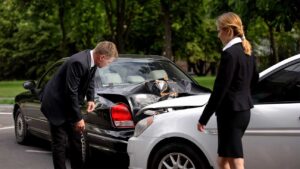
Who Investigated the Crash and Where Do You Get the Report?
The report path depends on the location and responding agency:
- West Monroe Police Department: The city’s official police contact page lists accident-report and records information.
- Ouachita Parish Sheriff’s Office: The sheriff’s Records and Identification page explains how to request an OPSO crash report.
- Louisiana State Police: The LSP crash-report portal handles crashes investigated by State Police. It does not contain city-police or sheriff’s reports.
Get the report, but do not stop there. Reports can contain incomplete witness information, an initial diagram, or a preliminary account written before video, vehicle data, and later evidence are available.
West Monroe Roads Matter Because the Evidence Is Location-Specific
West Monroe’s road network mixes interstate traffic, bridge approaches, commercial driveways, and signalized intersections. The city’s LADOTD-sourced traffic-count map identifies major routes that include I-20, Thomas Road (LA 617), Cypress Street (US 80), North 7th Street (LA 143), and the Mill Street and Stella Street portions of LA 34. Cypress Street and US 80 are the same corridor in West Monroe, not separate roads.
Traffic volume does not prove that one road has the most crashes. The useful point is that each location creates a different evidence plan. An I-20 collision may involve ramp geometry, commercial vehicles, dashcam footage, or event-data recorders. A crash on Cypress Street may turn on a traffic signal, a left turn, driveway access, or video from a nearby business. A bridge-approach collision may involve lane position and a sudden slowdown. We start with the exact block, direction of travel, lane, time, and responding agency instead of forcing the facts into a generic city-page narrative.
Louisiana Deadlines and Fault Rules Depend on the Crash Date
Louisiana changed several rules in a short period. The date of the collision matters.
| Issue | Crash date | General rule |
|---|---|---|
| Filing deadline | Before July 1, 2024 | The former one-year prescriptive period may apply. Act 423 of 2024 applies prospectively and did not revive older claims. |
| Filing deadline | On or after July 1, 2024 | Civil Code article 3493.1 generally provides two years from the day injury or damage is sustained. |
| Comparative fault | Before January 1, 2026 | The former pure comparative-fault rule generally applies. Fault can reduce recovery even when it does not eliminate it. |
| Comparative fault | On or after January 1, 2026 | For an ordinary negligence claim, amended Civil Code article 2323 generally bars recovery at 51% or more fault and reduces damages below 51%. |
| No Pay, No Play | On or after August 1, 2025 | Under Act 16 of 2025, an uninsured owner or operator may be unable to recover the first $100,000 of bodily injury damages and the first $100,000 of property damage, subject to statutory exceptions. |
These are general rules, not a deadline calculation for a specific case. Prescription can turn on the type of claim, the parties, interruption or suspension, and other facts. Do not assume that an insurance claim, an adjuster’s promise, or ongoing negotiations stop the filing clock. For a fuller explanation, see our guides to Louisiana prescription deadlines and Louisiana comparative fault.
How the 51% Fault Rule Can Decide a West Monroe Claim
For an ordinary negligence crash occurring on or after January 1, 2026, a person found 51% or more at fault generally recovers nothing. A person found less than 51% at fault may still recover, but the award is reduced by that percentage. If proven damages are $100,000 and the injured person is 20% at fault, the recovery is reduced to $80,000 before other legal and coverage issues are applied. At 51% fault, the amended rule generally bars that person’s recovery.
That is why a casual statement such as “I might have been a little late on the yellow” can matter. Fault should be evaluated from the full record, including:
- scene and vehicle photographs;
- witness accounts;
- traffic-signal sequence and lane markings;
- vehicle damage and event-data information when available;
- dashcam or business video when it exists;
- phone and electronic records when legally obtainable and relevant; and
- the complete crash report and any supplements.
The insurer’s first percentage is a negotiating position, not a court ruling.
Louisiana’s Minimum Insurance May Not Cover a Serious Injury
For an ordinary passenger vehicle, La. R.S. 32:900 sets minimum liability limits of only $15,000 for bodily injury to one person, $30,000 for bodily injury to two or more people in one crash, and $25,000 for property damage. A hospital visit, imaging, follow-up treatment, and missed work can exceed $15,000 quickly.
The other driver’s liability policy is not always the only potential source of recovery. Depending on the facts, we may examine:
- the policy covering the at-fault vehicle;
- a separate policy covering its driver;
- an employer’s commercial policy if the driver was working;
- rideshare or delivery coverage if an app-based driver was involved;
- umbrella or excess insurance;
- medical-payments coverage; and
- uninsured or underinsured motorist coverage on the occupied vehicle or another policy that covers the injured person.
On most personal auto policies, Louisiana law generally provides UM/UIM coverage unless the named insured validly rejected it, selected lower limits, or chose economic-only coverage. Commercial auto policies follow different selection rules. The policy, declarations, endorsements, and coverage-selection forms need to be reviewed. See La. R.S. 22:1295.
If You Were Uninsured, Do Not Assume You Have No Claim
For crashes occurring on or after August 1, 2025, Louisiana’s current No Pay, No Play law can prevent an uninsured owner or operator from recovering the first $100,000 of bodily injury damages and the first $100,000 of property damage. Act 16 of 2025 made that change effective August 1, 2025. This is a recovery limitation, not Louisiana’s minimum insurance limit.
Important exceptions can apply when the other driver is convicted of or pleads no contest to qualifying impaired driving, intentionally causes the collision, flees the scene, or was furthering a felony. Ordinary passengers are generally treated differently unless the passenger also owned the uninsured vehicle. The statute also treats a legally parked vehicle differently.
If coverage had lapsed or someone else owned the vehicle, tell the lawyer exactly what happened. Do not reject the case based on a slogan. Read our detailed Louisiana No Pay, No Play guide for the current rule and exceptions.
What Compensation May Be Available?
A car accident claim is not valued from a diagnosis alone. Depending on the proof, causation, fault, and available coverage, legally recoverable damages may include:
- past and future medical expenses;
- rehabilitation, medication, and medically supported future care;
- lost income and diminished earning capacity;
- physical pain and mental suffering;
- disability, scarring, disfigurement, and loss of enjoyment of life;
- vehicle repair or total-loss value, towing, storage, rental or loss of use; and
- diminished value when the evidence supports it.
Each claimed loss must be connected to the collision and proven. Medical records establish more than a bill total. Wage records must show what was actually missed. Future losses usually require reliable medical or vocational support. Our Louisiana damages and insurance guide explains how those proof issues fit together.
Who May Be Responsible Besides the Other Driver?
The driver is only the starting point. Depending on the facts, responsibility or insurance coverage may involve:
- the vehicle’s owner;
- an employer whose employee was acting within the course and scope of work;
- a trucking, delivery, or rideshare company under the governing facts and policy terms;
- a bar or alcohol vendor in the limited circumstances Louisiana law recognizes;
- a vehicle or component manufacturer when a defect contributed to the injuries; or
- a public entity responsible for a dangerous roadway condition when the legal notice and causation requirements can be met.
Multiple responsible parties can mean multiple evidence sources and insurance policies. It can also mean special deadlines, so ownership, employment, and government involvement should be identified early.
When It Makes Sense to Call a Car Accident Lawyer
Not every minor collision requires a lawyer. If no one was injured, the insurer accepts responsibility, and the only dispute is a small repair bill, you may be able to handle the property claim yourself. A legal review becomes more important when:
- you need medical care or may have a lasting injury;
- the insurer disputes fault or says you may be partly responsible;
- more than two vehicles were involved;
- a commercial, government, rideshare, or delivery vehicle was involved;
- the other driver has no insurance or only minimum limits;
- the insurer requests a recorded statement, broad medical authorization, or release;
- a child was injured or a person died; or
- you do not know which deadline, policy, or court applies.
Unsure whether your claim needs legal help? Call (318) 777-5000 or request your free 48 to 72 Hour Action Plan. A review is free and does not obligate you to hire us.
What Babcock Injury Lawyers Handles for You
Stephen Babcock worked as an Allstate trial attorney before founding Babcock Injury Lawyers in 2003. That experience helps our team recognize how carriers evaluate fault, causation, documentation, and trial risk. It does not give us special access or guarantee an outcome. It gives us a practical framework for building the proof an insurer and, if necessary, a jury will evaluate.
- Evidence preservation: identifying photographs, video, witnesses, vehicles, electronic data, and records that may disappear or change.
- Fault investigation: testing the crash report and each driver’s account against physical and electronic evidence.
- Coverage analysis: locating applicable liability, commercial, UM/UIM, MedPay, umbrella, and excess policies.
- Medical and wage proof: collecting records and explaining how the injuries affected work, daily activities, and future needs.
- Insurance communication: responding to adjusters, reviewing authorizations and releases, and presenting a supported demand.
- Litigation: filing in a proper court, taking discovery, working with appropriate experts, and preparing the case for trial when a fair resolution is not available.
You can review our client reviews and case results. Past results and testimonials do not guarantee a similar outcome. Every case depends on its own facts, law, proof, and insurance coverage.
What Happens After You Contact Us?
- We listen and identify the immediate risks. We ask what happened, who responded, what treatment has begun, what evidence exists, and what the insurers have requested.
- We give you a 48 to 72 hour action plan. The plan identifies what to preserve, which deadlines need attention, what not to sign yet, and which insurance questions require follow-up.
- If we both decide to move forward, we confirm representation in writing. A phone call or form submission alone does not create an attorney-client relationship.
- We build the liability, medical, wage, and coverage files together. A car claim should not become disconnected piles of records handled by different adjusters.
- We pursue a supported resolution. A demand should not be rushed before the nature and likely duration of the injuries are reasonably understood. If the insurer will not make a fair offer, we can file suit and prepare the case for trial.
There is no reliable universal timeline for a car accident claim. The timeline depends on medical recovery, disputed fault, available insurance, the number of parties, and whether litigation becomes necessary.
Where Is a West Monroe Car Accident Lawsuit Filed?
Louisiana law can make more than one parish a proper venue. Under Code of Civil Procedure article 74, a tort suit may generally be filed where the wrongful conduct occurred or where the damages were sustained. The defendant-domicile rules in article 42 may provide another proper venue.
A lawsuit arising from a West Monroe collision can often be filed in Ouachita Parish. District-court cases there are handled by the Fourth Judicial District Court at the Ouachita Parish Courthouse in Monroe. The correct venue still depends on the parties and facts, so it should be analyzed rather than assumed.
Babcock Injury Lawyers serves West Monroe and Ouachita Parish from its Ruston office at 207 W Carolina Avenue, Ruston, Louisiana 71270. Call (318) 777-5000.
West Monroe Car Accident Questions
How long do I have to file a car accident lawsuit?
For most Louisiana crash claims arising on or after July 1, 2024, Civil Code article 3493.1 generally gives you two years from the day injury or damage is sustained. Claims arising before the law changed may remain subject to the former one-year rule. Exceptions can change the calculation, so confirm the deadline instead of relying on a general webpage.
Should I give the other driver’s insurer a recorded statement?
You generally do not owe the other driver’s insurer a recorded statement simply because an adjuster requests one. Your own policy may impose cooperation duties, which is a different question. Before any recorded statement, understand who is asking, why it is requested, and which facts are still unclear.
What if my neck, back, or head symptoms began the next day?
A delay does not automatically prove or disprove causation. Get appropriate medical care, give an accurate timeline, and do not exaggerate or minimize what you are experiencing. Insurers examine treatment timing, prior history, consistency, and medical findings.
What if I may have been partly at fault?
Do not assume the claim is over. For an ordinary negligence crash on or after January 1, 2026, fault under 51% generally reduces recovery, while fault of 51% or more generally bars it. Earlier crashes are generally governed by the former rule. The percentage must be supported by evidence.
What if the other driver has no insurance or only minimum limits?
We examine UM/UIM, MedPay, vehicle-owner, employer, commercial, rideshare, umbrella, and excess coverage when the facts support them. UM/UIM coverage is not automatic in every situation because it can be validly rejected or modified, so the actual policy documents matter.
Who pays my medical bills while the claim is pending?
The liability carrier usually does not pay medical bills one at a time while you treat. Depending on the circumstances, bills may initially be processed through health insurance, MedPay, another benefit plan, or an arrangement with a provider. Reimbursement claims and liens may have to be resolved from a settlement. The right approach depends on the coverage and contract language.
Does the police report decide who was at fault?
No. It is important evidence and may contain a diagram, statements, citations, and the officer’s observations, but insurers, lawyers, judges, and juries can consider additional evidence. A traffic citation is not the same as a final civil-fault allocation.
How long will my claim take?
There is no reliable universal timeline. A claim should not be settled before the injury, prognosis, fault evidence, and available insurance are understood well enough to make an informed decision. Serious injuries, disputed fault, multiple policies, or litigation can take longer.
How much does it cost to hire Babcock Injury Lawyers?
The case review is free. If we accept the case, the contingency fee and case-cost terms are set out in a written agreement. Under our agreement, you owe no attorney fee or case costs unless we recover compensation for you.
Do you have an office in West Monroe?
We serve West Monroe from our Ruston office, roughly 30 miles west on I-20. Many claims can begin by phone and secure document exchange. If an in-person meeting is useful, we will discuss the best arrangement for your condition and the case.
Get Your Free 48 to 72 Hour Action Plan
A quick settlement can permanently close your claim before you know what the injury will cost. Call Babcock Injury Lawyers at (318) 777-5000 or contact us online. We will identify the immediate deadline questions, evidence to preserve, insurance issues to investigate, and mistakes to avoid.
We serve West Monroe and Ouachita Parish from our Ruston office. The review is free. Under our written contingency agreement, there is no attorney fee or case costs unless we recover compensation for you.
Editorial & Legal Accuracy Notice (Louisiana)
Authored and legally reviewed by: Stephen Babcock, Louisiana Bar No. 26792.
This page provides general information about Louisiana law and is not legal advice for a particular case. Laws, deadlines, insurance coverage, and outcomes depend on specific facts and can change. Source-sensitive statements were checked against the Louisiana Legislature, official court, and official agency pages listed above on the review date. Reading this page, calling the firm, or submitting a form does not create an attorney-client relationship. Representation begins only after a conflict check and a signed written agreement. Past results do not guarantee future outcomes. This page may be considered attorney advertising. See the firm’s full website disclaimer.