

If you are in a car crash while pregnant, seek immediate medical attention even if you feel unhurt. That is the advice in NHTSA’s guidance for pregnant drivers and passengers. Tell responders and medical staff that you are pregnant, how far along you are, and what happened. Insurance calls and photographs can wait until care is underway.
Tell the care team what you felt and how the crash happened
Describe the direction of impact, whether the air bags deployed, where the seat belt rested, and whether you struck any part of the vehicle. Give your obstetric provider’s name, relevant pregnancy history, and medication information if available. Do not delay treatment to collect those details.
The care team decides what examination, monitoring, testing, and follow-up are appropriate. Ask which changes require an immediate return and how to contact the obstetric team after discharge. Keep those instructions where you and anyone helping you can find them.
New symptoms need medical attention
Vaginal bleeding, leaking fluid, abdominal pain, contractions, fainting, or a change in your baby’s usual movement should be reported promptly. Call 911 for severe symptoms or an emergency. The CDC’s urgent maternal warning signs include severe persistent belly pain, trouble breathing, dizziness or fainting, and reduced fetal movement.
One concern after trauma is placental abruption, when the placenta separates from the uterine wall before delivery. MedlinePlus describes bleeding and painful contractions among its symptoms. You cannot rule it out at home or from how little damage the car appears to have. Follow the medical team’s assessment and return instructions, including when symptoms develop after an initially reassuring visit.
Let someone help with the crash records
A family member or another trusted person can collect the report number, exchange information, tow-yard details, repair paperwork, and witness contacts while you focus on care. If photographs or video can be obtained safely, save the original files and a backup. Ask that relevant dashcam or nearby surveillance footage be preserved before it is overwritten.
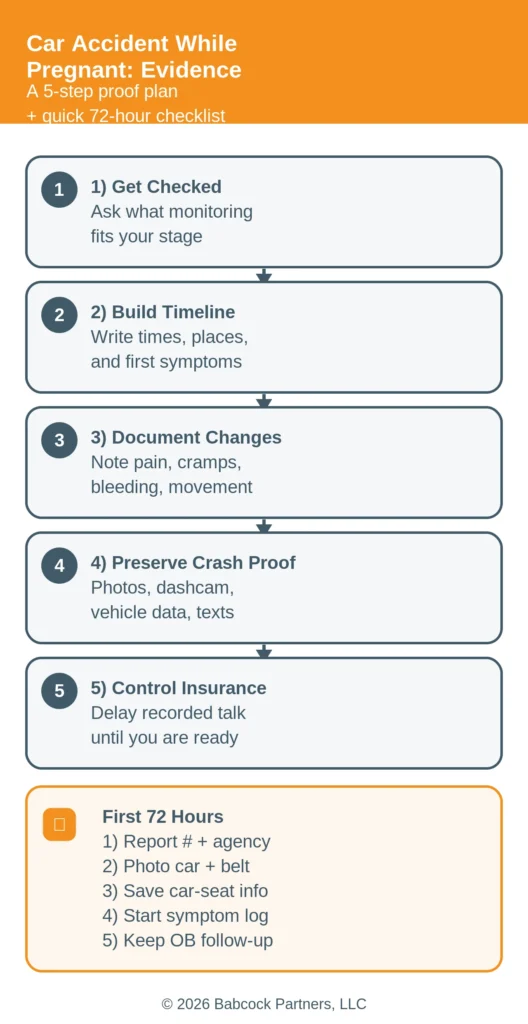
Keep a simple timeline of the collision, first symptoms, medical visits, and follow-up instructions. Include prior pregnancy-related symptoms honestly so the clinician can assess what changed. Record practical effects such as time away from work, help needed at home, or restrictions the care team gives you. There is no need to turn every day into a lengthy diary.
Our Louisiana crash-report guide explains how to request the report. The general crash checklist covers other evidence that someone helping you can organize.
Keep insurance questions separate from medical decisions
Report facts accurately, including when you do not yet know the diagnosis or expected course of care. Do not guess about pregnancy effects during an insurance interview. Review requests for medical authorizations and any proposed release so you understand which records or claims they cover.
An evaluation may need records from before and after the crash, the treating providers’ findings, and information about work or daily activities. Photographs alone do not determine whether the crash caused an injury, and a later complication is not automatically attributable to the collision.
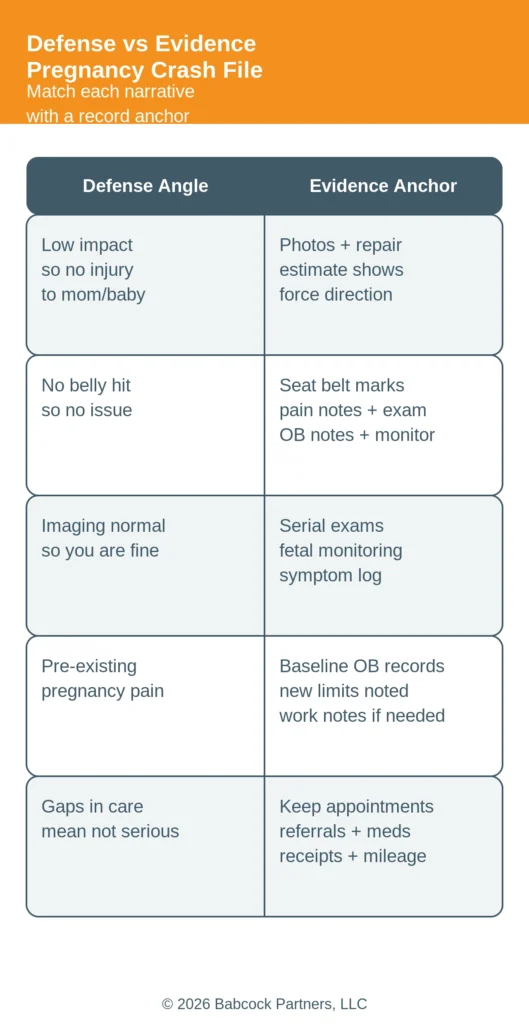
Our Baton Rouge car accident lawyers can review the coverage, release language, and deadline while you follow medical advice. Under Louisiana Civil Code Article 3493.1, covered delictual actions arising on or after July 1, 2024 generally have a two-year prescriptive period. Older claims and special circumstances require separate analysis. Do not assume pregnancy or an unresolved medical question postpones a legal deadline.
Seat belts and air bags during pregnancy
For future travel, NHTSA recommends wearing the lap belt snugly below the belly across the hips and pelvic bone, with the shoulder belt across the chest between the breasts. Do not place the shoulder belt under an arm or behind your back. Sit upright, leave room between the belly and steering wheel while maintaining safe control, and keep air bags enabled. If you cannot drive comfortably and safely, arrange another driver.