

A longshoreman loads, unloads, or handles cargo moving between a vessel and the shore. The work may involve a ship’s hold, a dock, a crane, cargo lashings, or a terminal where containers are transferred. It is different from simply having a job near the Mississippi River or working for a business with “marine” in its name.
That distinction matters after an injury. A waterfront worker may qualify for benefits under the Longshore and Harbor Workers’ Compensation Act, usually called the LHWCA. A vessel crew member may have a different maritime claim. The answer requires the worker’s actual assignments and the location of the injury, not just a job title.
What work does a longshoreman do?
OSHA’s definition of longshoring operations covers handling cargo, stores, gear, and other materials aboard vessels and during transfers into or out of them. Loading a vessel, securing its cargo, and operating equipment used in that process are familiar examples. The safety regulation’s definition does not, by itself, decide eligibility for injury benefits.
The Longshore system also reaches some harbor work beyond cargo handling, including shipbuilding, ship repair, and shipbreaking. A mechanic’s work history may therefore matter more than the word “mechanic” on a badge. Identify what the worker repaired, how it was used, and whether the assignment involved vessel operations.
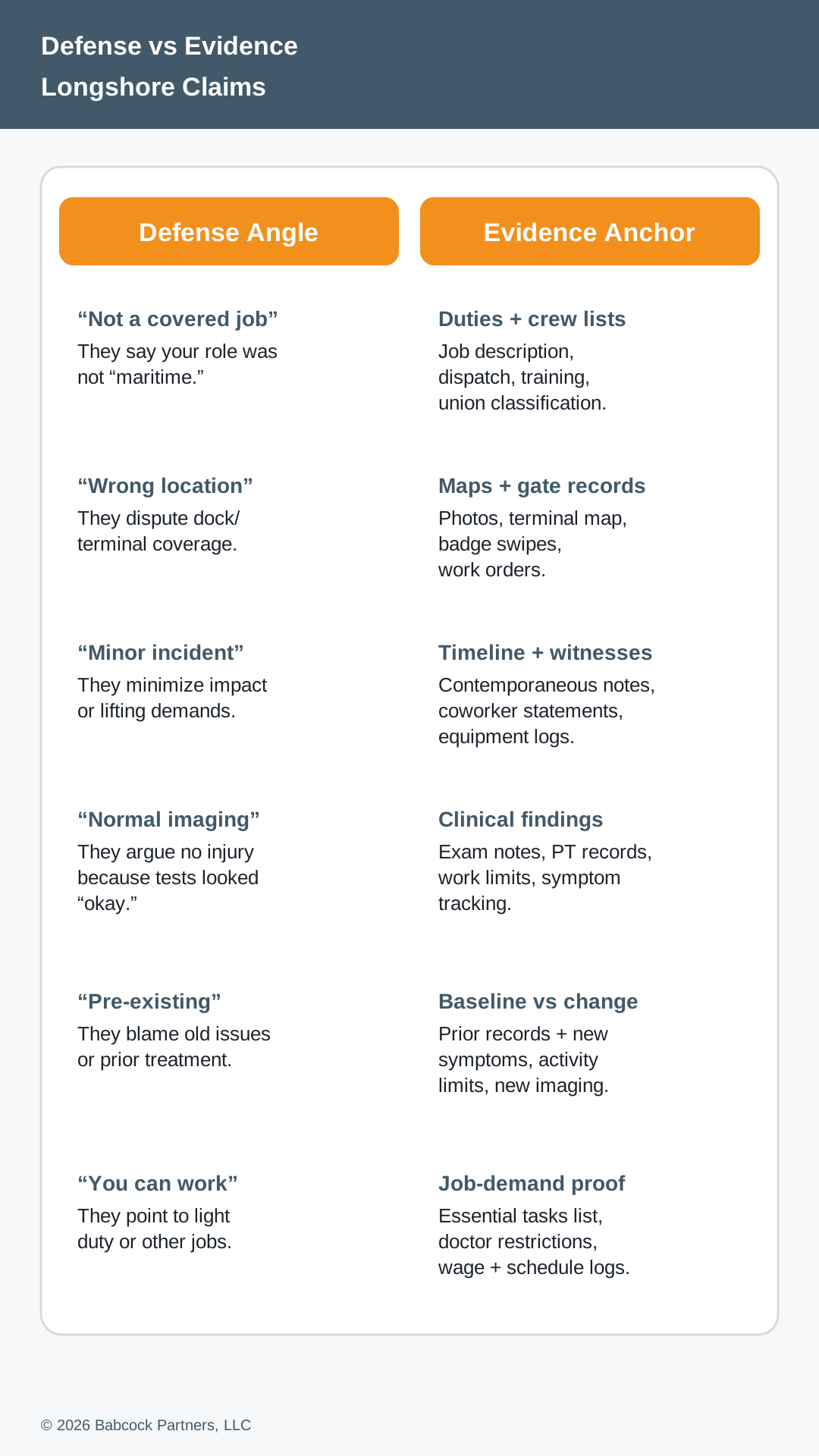
Coverage depends on the work and the place
For land-based waterfront injuries, two separate questions are commonly called status and situs. Status concerns the employment. Situs concerns the location. The Act’s coverage provision, section 3, reaches navigable waters and specified adjoining maritime areas. A connection to shipping does not make every inland workplace a covered location.
Scroll horizontally to see all columns. Use the arrow keys when the table is focused.
| Coverage question | What needs to be established | Useful records |
|---|---|---|
| Status: what work did the employee perform? | The actual duties, their relationship to maritime work, and any applicable exclusion | Assignments, dispatch messages, job tickets, training records, and accounts from coworkers |
| Situs: where did the injury occur? | The precise site, its relationship to navigable water, and its use | Terminal plans, berth and gate numbers, photographs, work orders, and location records |
The location requirement has a particular importance in Louisiana. In New Orleans Depot Services, Inc. v. Director, OWCP, the Fifth Circuit held that “adjoining” means bordering on or contiguous with navigable water. The inland container-repair facility in that case did not qualify merely because its work was connected to maritime transportation. A site description such as “near the port” leaves an important question unanswered.
There are also exclusions. 20 C.F.R. section 701.302 excludes vessel masters and crew members and describes other excluded categories. Several exclusions depend on state workers’ compensation coverage, including certain exclusively clerical workers, marina workers, and temporary suppliers or transporters. The exact duties and statutory conditions matter; an employer’s label alone does not resolve the issue.
A longshore worker is not necessarily a seaman
A person can work aboard a vessel without being a member of its crew. Conversely, a crew member’s injury does not become an ordinary dock claim simply because the vessel was tied up when it happened.
Seaman status requires a separate examination of the employment relationship and vessel connection. Our article on Jones Act seaman status explains the duration and nature requirements. Preserve the assignment history while that question is being investigated. One day’s location may not describe the worker’s usual role.
What benefits may be available?
The Department of Labor’s Longshore overview describes medical care, disability compensation, benefits for certain permanent impairments, rehabilitation, and benefits for eligible survivors. The amount and duration depend on the applicable benefit category and the facts. An inability to return to a particular assignment should be documented with the job’s demands and the medical restrictions.
Scroll horizontally to see all columns. Use the arrow keys when the table is focused.
| Benefit | Relevant information |
|---|---|
| Medical care | Treatment records, referrals, prescriptions, and the relationship between the condition and the work injury |
| Disability compensation | Wage history, periods unable to work, medical restrictions, and any work actually offered or performed |
| Permanent impairment benefits | The affected body part, medical findings, and the benefit provisions that apply |
| Vocational rehabilitation | Work restrictions, prior skills, and realistic return-to-work options |
| Survivor benefits | The work-related death and the survivor’s eligibility |
Reporting an injury and filing a compensation claim are separate steps. Sections 12 and 13 of the Act contain notice and claim-filing rules, including awareness provisions and exceptions. Occupational disease, hearing loss, and prior compensation payments can affect the calculation. Get the applicable dates checked promptly rather than waiting for a dispute over coverage to end. A practical suggestion to gather records during the first few days is not a statement of the legal deadline.
Record the task, equipment, and exact location
Get necessary medical care first. As soon as you can safely report the incident, describe the time, place, task, and what you personally observed. Keep a copy of the report and identify who received it. If you do not know why a load shifted or a machine moved, say so rather than guessing.
“Hurt at the terminal” is usually too vague to locate the evidence. A berth number, vessel name, container number, crane identifier, or gate can connect your account to records held by the terminal, employer, vessel operator, or another contractor. Save the original photographs, messages, dispatch instructions, and witness contact details you already have. Photograph equipment only when it is safe and permitted.
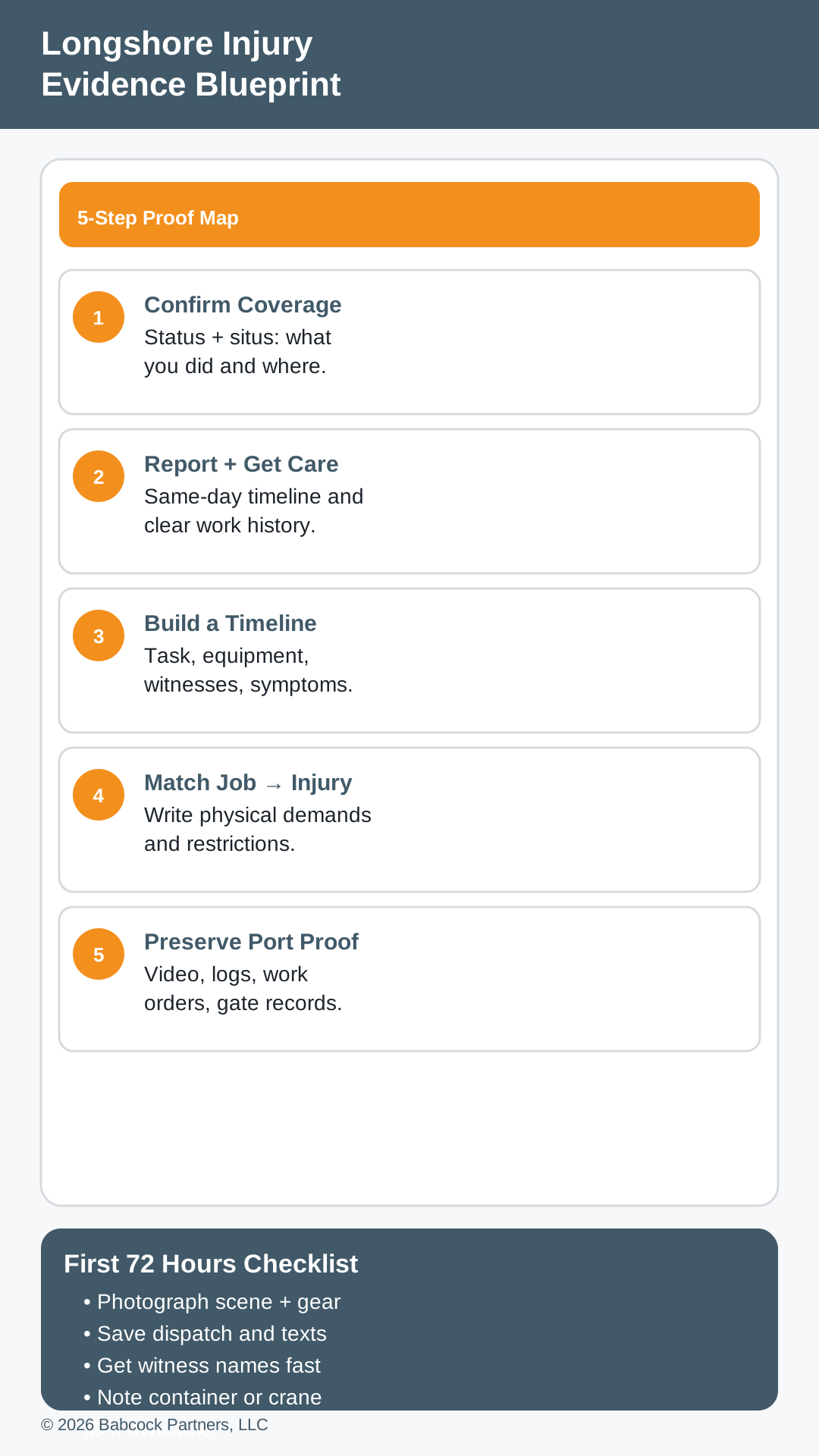
Identify recordings and equipment records before routine operations make them harder to obtain. A preservation request should name the relevant location, time range, equipment, and record holder. It cannot guarantee that a camera recorded the event or that every requested log exists. Our article on preserving evidence after an oilfield injury discusses similar problems when several contractors control different parts of a worksite.
Medical records should describe the real physical work. Lifting, climbing, reaching, standing, and operating controls may place different demands on an injured worker. Keep written restrictions and the details of any proposed modified assignment. If a medical history is wrong, ask the provider to correct the factual error. A clear record includes prior symptoms and treatment as well as changes after the incident.
Benefits and a separate injury lawsuit need different analysis
A benefits claim and a claim against another responsible company may involve different legal rules. The LHWCA addresses employer exclusivity and vessel liability in section 5 and third-party claims in section 33. Receiving benefits does not establish that another company was negligent, and a third-party settlement can affect benefit rights.
Where Louisiana law actually governs a separate negligence claim, Civil Code article 3493.1 generally supplies a two-year period for claims arising on or after July 1, 2024; earlier claims generally remain under the former one-year rule. Article 2323 generally bars recovery at 51 percent negligence for injury-causing conduct on or after January 1, 2026. Those state rules must not be applied automatically to federal Longshore benefits or maritime claims. Identify the governing law and deadline for each potential claim.
Our offshore and maritime injury lawyers can review the work history, injury location, and companies involved. Bring the incident report, assignment records, and medical restrictions if you have them. Call (225) 500-5000 or use the contact form below.
Sources checked: September 29, 2026. Last reviewed: September 28, 2026.