

After a car crash that results in an amputation, the immediate questions are medical: what treatment is needed, what recovery may involve and what help will be needed at home. The legal claim has to account for those needs as they become clear. A hospital bill alone cannot describe the effect of losing a limb.
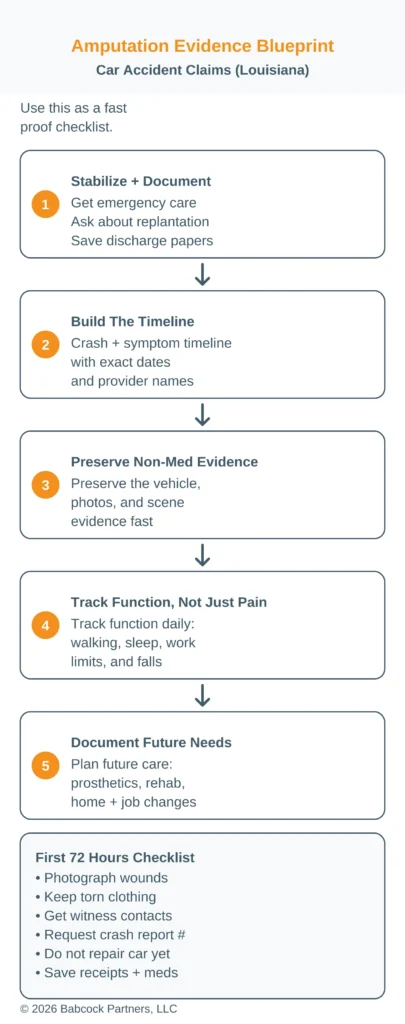
A family member can help organize records and find out where the damaged vehicle is being stored while the injured person concentrates on care. There is no need to assemble a perfect case file before seeking advice. The priorities are to protect the evidence that may disappear and keep an accurate record of the treatment already underway.
The medical record should explain why the amputation was necessary
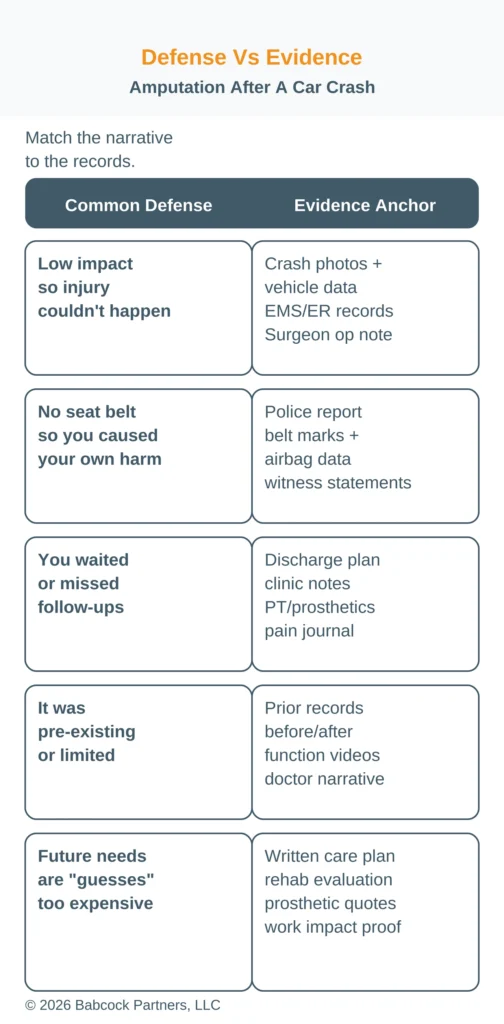
A claim needs to connect the collision, the injury and the medical treatment. The crash report, photographs and witness accounts help explain the impact. Emergency records and the surgeon’s notes explain what happened to the limb and why particular treatment was chosen.
Those are different parts of the same account. A photograph may show severe vehicle damage without explaining the surgical decision. An operative report may describe the injury in detail without resolving who caused the crash. Both deserve attention.
Keep the names of the EMS agency, hospitals, surgeons and rehabilitation providers. Discharge paperwork is useful, but it is not the complete hospital record. The operative report, consultations, imaging and follow-up notes can explain decisions that a short discharge summary leaves out. If there were complications or additional procedures, keep their dates in the timeline as well.
Let someone else handle the records that cannot wait
Medical care comes first. If possible, ask a trusted person to gather the report number, witness contact information and existing photographs. They can also identify the tow yard, find out whether repairs or disposal are planned, and save notices about the vehicle.
Tell your lawyer about any proposed inspection, repair, teardown or salvage before it happens. The vehicle’s condition may matter to questions about the collision, a possible defect or how the injury occurred. Storage charges and other obligations also need attention; preserving evidence should be planned rather than left to an indefinite hold.
Keep original photographs and video. Note who took them and when. Save messages from the tow yard, repair shop and insurers. A short list of where records are located is often more useful than trying to put everything into a polished presentation during a hospital stay.
Document recovery in terms of ordinary activities
Rehabilitation involves more than a pain score. MedlinePlus’s limb-loss overview discusses rehabilitation and learning ways to perform daily activities. For a claim, therapy records and work restrictions help explain what a person can do, what requires assistance and what is still being evaluated.
A brief personal record can supplement those professional observations. Write down specific difficulties with dressing, bathing, moving between a bed and chair, using stairs, sleeping or performing job tasks. Record help actually received and expenses actually incurred. Include improvements as well as setbacks so the account reflects recovery honestly.
Johns Hopkins Medicine explains that people may experience sensations or pain in the missing limb after amputation. Describe symptoms to the treating team rather than trying to label them yourself. Pain in the remaining limb, phantom sensations and other concerns may require different evaluation. Follow the medical team’s instructions, and direct new or worsening medical concerns to a healthcare professional.
Keep discharge instructions, medication lists, appointment information and receipts for supplies or equipment together. If transportation, cost or another problem interrupts treatment, record the reason and tell the provider. The records should explain what happened, including obstacles to care.
Future care needs a plan, not a round number
The need for future treatment, rehabilitation or prosthetic care must be evaluated for the individual. The relevant records may include therapy assessments, prosthetics evaluations, provider recommendations and work restrictions. They should explain what is recommended, why it is needed and how it relates to the injury.
Ask the treating team about functional goals and expected follow-up. A recommendation may change as healing progresses. Keep the earlier and later evaluations so that the progression can be understood instead of treating the first estimate as a final answer.
Work loss also needs specifics. Preserve wage records and a description of the actual job duties, together with medical restrictions. Whether a person can return to the same job depends on what that job requires and the limitations documented by the providers.
Our amputation injury practice addresses the evidence needed to evaluate limb-loss claims, including the consequences that continue after the initial hospital stay.
Disputes can remain even when the injury is obvious
The parties may agree that an amputation occurred while disagreeing about fault, the connection between the crash and particular complications, or the cost of future care. The answer to each dispute requires different evidence. Scene records address the collision. Medical records address diagnosis and treatment. Provider recommendations and supporting cost information address future needs.
A claim that a condition existed before the crash should be evaluated against the actual medical history and the changes after the collision. Likewise, an estimate of future care should be examined for its assumptions. Repeating that an injury is serious does not answer those questions.
Before signing a medical authorization or settlement release, understand what it covers. A release can resolve rights beyond the payment being discussed. Requests from your own insurer may involve policy duties, so get advice about the particular request rather than assuming all insurance paperwork should be handled the same way.
Check the applicable deadline and fault rules
Louisiana Civil Code article 3493.1 provides a two-year period for delictual actions and took effect July 1, 2024. The accident date and nature of the claim matter. A severe injury does not remove the need to determine the deadline, and some claims are subject to different rules.
For claims governed by the amendment to Civil Code article 2323 effective January 1, 2026, negligence of 51 percent or more bars the injured person’s recovery; a lower percentage reduces damages proportionately. The applicable version must be checked for the claim. Disputes about the conduct of either driver therefore deserve investigation even when the medical consequences are extensive.
If you need help with a claim after limb loss, contact Babcock Injury Lawyers. The hospital names, crash date, report number and vehicle location are useful starting points. You do not have to collect every record before making the call.