

A tractor-trailer may weigh about 35,000 pounds when empty and as much as 80,000 pounds when legally loaded for ordinary Interstate travel, but neither number is universal. The tractor, trailer, fuel, cargo, axle spacing, route, and any permit all affect the lawful and actual weight.
That distinction matters after a crash. A truck’s appearance does not establish its weight, and the 80,000-pound figure is not proof that a particular truck was fully loaded or overweight. Scale records, shipping documents, onboard data, and the vehicle’s specifications can provide a much better answer.
Empty weight and legal weight are different questions
People often use “semi,” “18-wheeler,” and “tractor-trailer” to describe the whole combination. The tractor is the powered unit. The semitrailer carries the freight and rests partly on the tractor. Their empty weight varies with the engine, sleeper berth, frame, trailer type, fuel, accessories, and other equipment.
An empty combination is sometimes called its tare weight. Add the driver, fuel, cargo, pallets, securement equipment, and anything else on board to get the gross vehicle weight at that time. The manufacturer’s gross vehicle weight rating is a capacity rating, not a scale reading.

Why 80,000 pounds is a starting point, not the whole rule
Federal law generally limits a vehicle operating on the Interstate System to 80,000 pounds gross weight, 20,000 pounds on a single axle, and 34,000 pounds on a tandem axle. The Federal Highway Administration’s bridge-formula guide explains that axle number and spacing can produce a lower maximum. Posted bridge limits and other route restrictions can also control.
Louisiana applies state size and weight rules and administers permits for some oversize or overweight movements. The Louisiana Department of Transportation and Development publishes the current Louisiana regulations for trucks, vehicles, and loads. A permit may authorize a movement that would not be lawful under ordinary limits, but it can include route, axle, time, escort, or other conditions.
So an 80,000-pound scale ticket is not automatically evidence of a violation, and a truck below 80,000 pounds is not automatically legal. The analysis may require the axle weights, spacing, equipment, road, bridge postings, commodity, and permit.
How weight can affect a collision
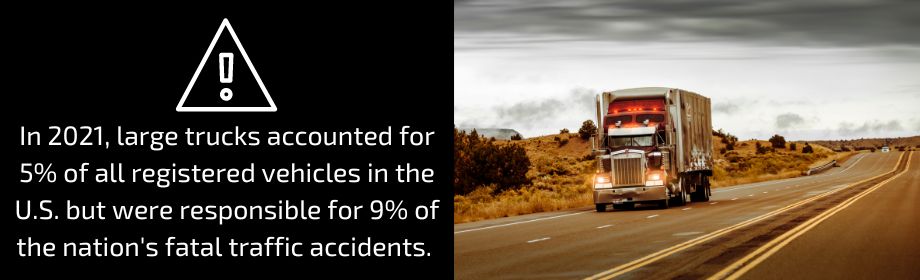
Mass is one reason a collision between a loaded tractor-trailer and a passenger vehicle can be so destructive. Speed, braking, grade, surface conditions, vehicle design, and impact angle also matter. Weight alone does not show how the crash happened or who was at fault.
A heavily loaded truck can require more distance to stop than a lighter vehicle under comparable conditions. Cargo can also shift, change the vehicle’s balance, or increase rollover risk if it is not distributed and secured correctly. Those issues should be investigated with the braking system, tires, maintenance history, road conditions, and driver inputs rather than assumed from the damage.
The firm’s published Baton Rouge truck-accident practice page identifies carrier, cargo, maintenance, and electronic records that may matter in a serious commercial-vehicle case.
Records that can show what the truck weighed
Useful evidence depends on the shipment and carrier, but may include:
- Certified scale tickets and weigh-station records
- Bills of lading, manifests, dispatch instructions, and delivery receipts
- Loading diagrams, pallet counts, commodity weights, and seal records
- Tractor and trailer identification numbers and manufacturer specifications
- Axle configuration, suspension data, and onboard weight-system records
- Oversize or overweight permits and the approved route
- Photographs or video of the cargo, trailer, and load securement
- Electronic logging, telematics, event data, and maintenance records
Some of those records may be held by the motor carrier, shipper, broker, loading facility, permit office, or scale operator. A prompt, specific preservation request is more useful than a general demand for “all records.” The article on 18-wheeler blind spots explains another operating limitation that may matter during a lane change or turn.
Weight is only one part of the safety picture
A truck may be within every weight limit and still be operated unsafely. Speed, following distance, fatigue, distraction, blind spots, braking, tires, lighting, maintenance, and cargo securement can all affect the sequence. The related guide to common crash causes and evidence explains why the investigation should begin with the vehicles’ movement and reliable proof rather than a label.
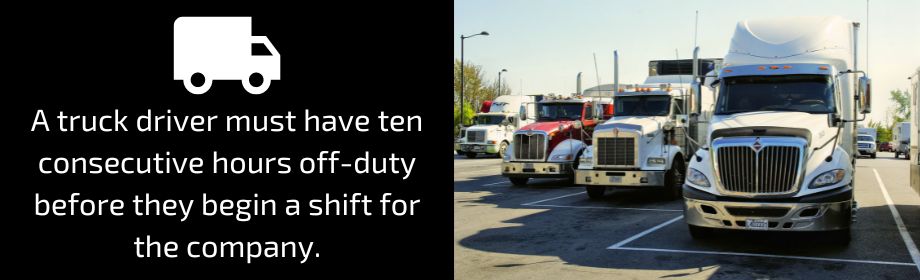
Federal hours-of-service rules are one example of a separate safety control. For many property-carrying drivers, the Federal Motor Carrier Safety Administration’s current summary describes an 11-hour driving limit after 10 consecutive hours off duty, a 14-hour driving window, and a 30-minute interruption after eight cumulative driving hours. Exceptions and different rules can apply, so a log should be evaluated against the driver’s operation rather than by slogan.
What the number can and cannot prove
Actual weight can help an engineer evaluate braking, vehicle dynamics, and impact forces. A weight or permit violation may also identify a loading or route issue. It does not automatically prove that the violation caused the crash, and compliance with a limit does not resolve driver fault.
A sound investigation therefore asks four separate questions: what the combination actually weighed, what limits applied on that route, whether the load and axles complied, and how any weight-related issue contributed to the collision. Keeping those questions separate avoids turning a useful number into a conclusion it cannot support.
This article provides general safety and legal information, not legal advice. Truck configurations, permits, routes, governing rules, evidence, and filing deadlines depend on the specific facts.