

After a car crash, there are usually several things to do at once: get medical help, arrange transportation, report the collision, and find out where the car was towed. This checklist puts those tasks in order and explains which records are worth keeping.
At the scene: safety comes first
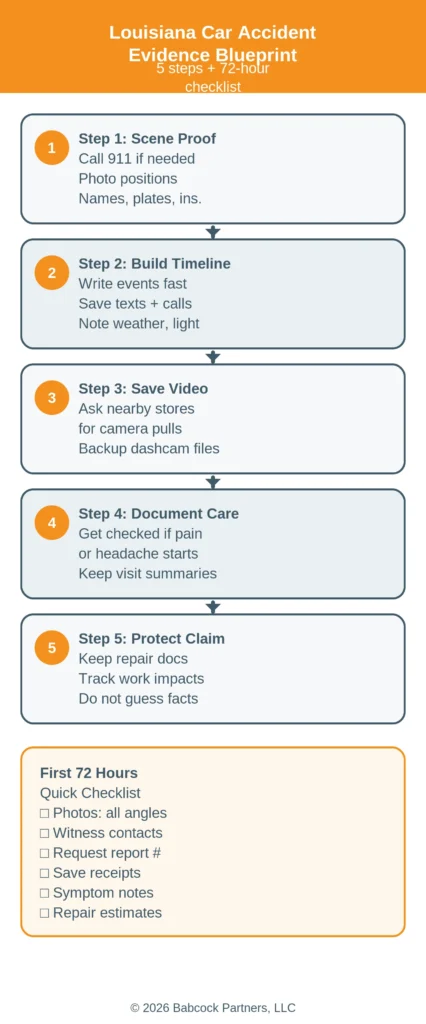
Call 911 if anyone is injured or the scene is dangerous. Move to a safe place when you can. Photos can wait until taking them will not put you or anyone else in traffic.
- Exchange names, contact information, license plates, and insurance details.
- Ask witnesses for their names and phone numbers. Note where each person was standing or driving.
- Photograph the vehicles and the surrounding road. Include lane markings, traffic signals, debris, and sight lines as well as close views of the damage.
- Save the investigating agency’s name and report number, if one is available.
- Write down what you remember while it is fresh. Distinguish what you saw from what another person told you.
Avoid guessing about speeds or distances. If you did not see something, say so. You can add information later without trying to fill every gap at the scene.
Before the vehicle is repaired
Keep the towing receipt, storage location, repair estimate, and photographs taken before work begins. If a serious injury or disputed collision may require a vehicle inspection, discuss that promptly with counsel. Storage charges and repair needs still have to be addressed; simply leaving the car in a tow yard is not a preservation plan.
Look for possible video sources, including a dashcam or a nearby business. Record the camera’s location and contact the person who controls it. Footage may be overwritten, and a request does not guarantee that a recording exists or will be retained.
In a rear-end collision, Louisiana’s following-distance rule may matter. The report and any citation should be considered with the photographs, witness accounts, and sequence of impacts.
Keep one running record
A simple dated list is enough. For each entry, identify the source: your memory, a receipt, a message, or a medical record. If two records disagree, keep both and note the difference rather than changing them to make the timeline match.
Scroll horizontally to see all columns. Use the arrow keys when the table is focused.
| When | What to save | Why it helps |
|---|---|---|
| Day of the crash | Scene photographs, witness contacts, report number, tow receipt | Preserves information about the collision and the vehicle’s original condition. |
| First medical visits | Symptoms reported, discharge instructions, prescriptions, follow-up appointments | Shows what the clinician evaluated and what care was recommended. |
| During recovery | Work restrictions, missed hours, bills, receipts, and changes in daily activities | Documents the effects of the injury over time. |
Tell your medical provider about new or worsening symptoms and relevant prior conditions. Seek care because you need it. A claim file cannot substitute for medical evaluation.
Our guide to paying medical bills after an accident explains why bills may arrive before an injury claim is resolved.
When the insurance company calls
Report the collision to your own insurer promptly and check your policy’s notice and cooperation requirements. Give accurate information, keep a record of the conversation, and ask for a copy of any document you are asked to sign.
A request from the other driver’s insurer deserves separate consideration. Before a recorded statement, broad medical authorization, or settlement release, understand what is being requested and which rights it could affect. If you are unsure about an answer, do not guess.
Preserve relevant texts, photographs, and social media content. Deleting an inconvenient post can create a separate evidence problem. The article on social media and injury claims explains why context and original records matter.
If part of the claim is disputed
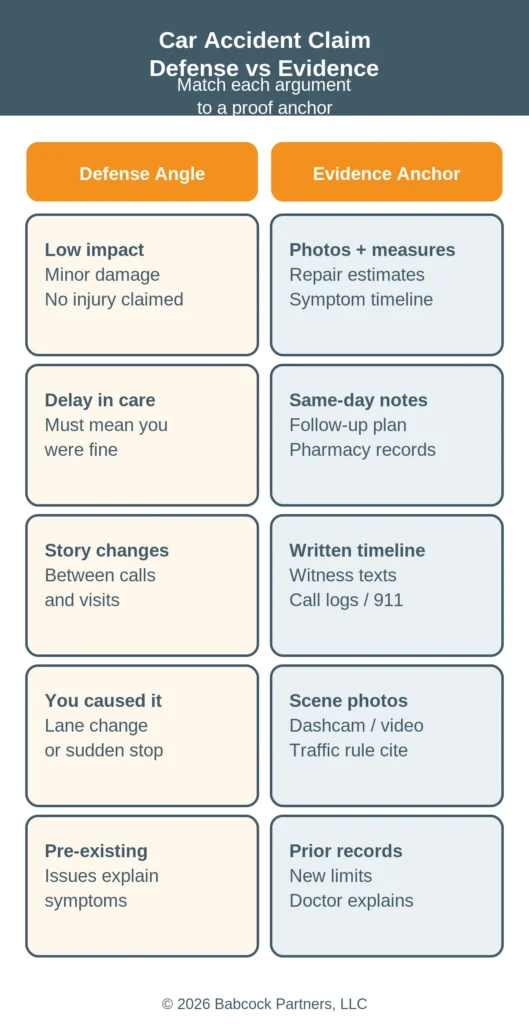
Ask what is actually in dispute. An argument about fault calls for different evidence than a question about a medical bill. Earlier medical records can help distinguish a new injury from a prior condition; repair photographs can help describe the collision, but they do not by themselves diagnose an injury.
Check the deadline against the accident date
Civil Code article 3493.1 generally provides two years for delictual actions arising on or after July 1, 2024. Earlier accidents and claims governed by special rules require separate analysis. Ongoing negotiations do not, by themselves, stop prescription.
For causes of action arising on or after January 1, 2026, article 2323 bars recovery when the injured person’s negligence is 51 percent or more. Below that threshold, damages are reduced proportionately. Earlier causes of action remain subject to the prior comparative-fault rule.
If injuries are serious, fault is disputed, or a commercial or government vehicle is involved, get advice early enough to address the evidence and the applicable procedures. Our Baton Rouge car accident lawyers can review those questions. Call (225) 500-5000 or use the contact form; you can start with the information you already have.