

“Type of mesothelioma” can describe two different things. A doctor may be referring to where the cancer began, such as the pleura around the lungs or the peritoneum in the abdomen. A pathology report may instead be describing what the tumor cells look like, such as epithelioid, sarcomatoid, or biphasic.
Those labels are not interchangeable, and neither one is the same as stage. The full pathology report, imaging, operative notes, and oncology records are the best sources for understanding exactly what was diagnosed.
Mesothelioma types by location
Mesothelioma forms in the mesothelium, the thin tissue that lines internal organs. The location where the cancer begins gives the disease its most familiar type name.
Pleural mesothelioma
Pleural mesothelioma begins in the lining around the lungs and is the most common form. The medical file may include chest imaging, records describing pleural thickening or fluid, procedure notes, and a pathology report from tissue sampling. Symptoms can include shortness of breath and chest pain, but those symptoms can have many causes and do not establish a diagnosis on their own.
Peritoneal mesothelioma
Peritoneal mesothelioma begins in the lining of the abdominal cavity. The National Cancer Institute’s treatment summary explains that malignant peritoneal mesothelioma arises from mesothelial cells of the peritoneum and spreads within the abdominal cavity. Relevant records may include abdominal imaging, operative notes, fluid studies, and tissue pathology.
Pericardial mesothelioma
Pericardial mesothelioma involves the lining around the heart. It is rare, and symptoms can resemble other cardiac conditions. Cardiology records, cardiac imaging, procedure notes, and any pathology material are important for identifying what clinicians actually found.
Testicular mesothelioma
This rare form can arise in the tunica vaginalis, tissue surrounding a testicle. The diagnostic file may include urology records, ultrasound or other imaging, operative notes, and surgical pathology.
The CDC’s current mesothelioma overview explains that mesothelioma is a cancer of tissue lining internal organs and that asbestos exposure causes most cases. The exact diagnosis still depends on the individual medical evidence.
Epithelioid, sarcomatoid, and biphasic cell types
A pathology report may classify malignant mesothelioma by the appearance and characteristics of the tumor cells. The National Cancer Institute describes three principal patterns:
- Epithelioid: tumor composed predominantly of epithelial-appearing elements.
- Sarcomatoid: tumor composed predominantly of spindle cells.
- Biphasic: tumor containing both epithelioid and sarcomatoid components.
Cell type can affect treatment discussions and prognosis, but a website summary cannot interpret an individual pathology result. Ask the treating oncologist or pathologist to explain the exact wording, the specimen that was tested, and whether additional review or molecular testing is recommended.
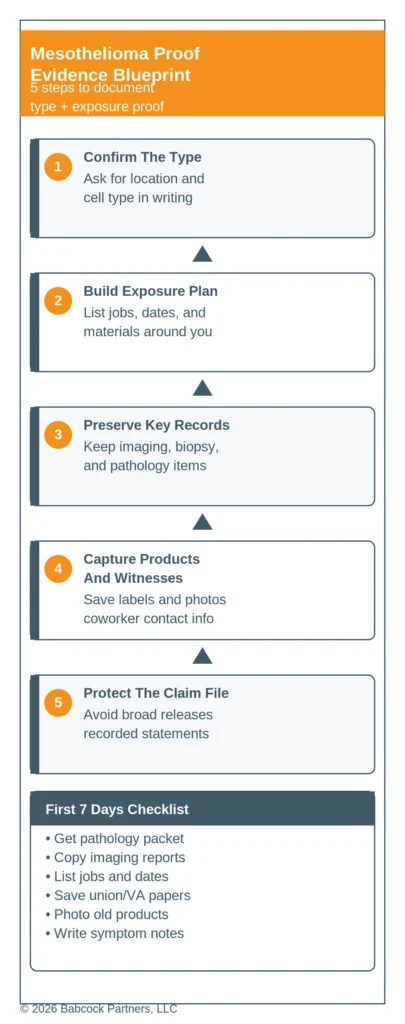
Keep the complete pathology packet rather than only a patient-portal summary. That packet may include the final diagnosis, microscopic description, immunohistochemical stains, addenda, outside-consultation reports, and the date and location of the specimen. If two facilities use different wording, compare the specimen dates before assuming that the reports conflict.
Why type and stage are different
Location answers where the cancer began. Histology answers what the tumor cells look like. Stage addresses the extent of the disease. A person can therefore have pleural mesothelioma with epithelioid histology at a particular stage. All three descriptions may appear in the same medical record.
Staging is most established for pleural mesothelioma. Imaging, lymph-node evaluation, operative findings, and pathology may all contribute. Peritoneal disease is evaluated differently. Treatment decisions also depend on the person’s overall health, tumor distribution, molecular features, and the judgment of the cancer team.
The National Cancer Institute’s patient treatment overview describes surgery, chemotherapy, radiation therapy, immunotherapy, targeted therapy, and treatment approaches used for peritoneal disease. Which options are appropriate is a medical decision for the treating team.
Records to request after diagnosis
Families often receive records from several hospitals and specialists. A focused request is more useful than asking only for “everything.” Consider requesting:
- the complete pathology report and all addenda;
- the operative or biopsy procedure note;
- radiology reports and, when available, copies of the images;
- oncology consultation and treatment-plan notes;
- hospital discharge summaries;
- molecular or biomarker testing results;
- the medication and treatment history; and
- the names of facilities holding tissue blocks or slides.
Record the date, facility, doctor, specimen location, and report type. Those details prevent a chest-biopsy report from being confused with a later consultation or an abdominal specimen.
How exposure history fits the medical record
Exposure history and diagnosis are related but separate records. The CDC reports that asbestos exposure causes most mesothelioma cases. ATSDR notes that mesothelioma signs may not appear until 30 to 40 years after asbestos exposure, so the relevant work or household history may reach back decades.
Start a chronology with employers, job sites, trades, approximate dates, tasks, contractors, coworkers, and materials. Include military service, ship or industrial work, construction and maintenance, home renovation, and possible household exposure from dusty work clothing when applicable. Our article on secondary asbestos exposure explains how a take-home history may be reconstructed.
Do not disturb old insulation, gaskets, flooring, or another suspected asbestos-containing material to obtain a sample. Photographs, labels, invoices, manuals, and knowledgeable witnesses may help identify a product without creating a new exposure risk.
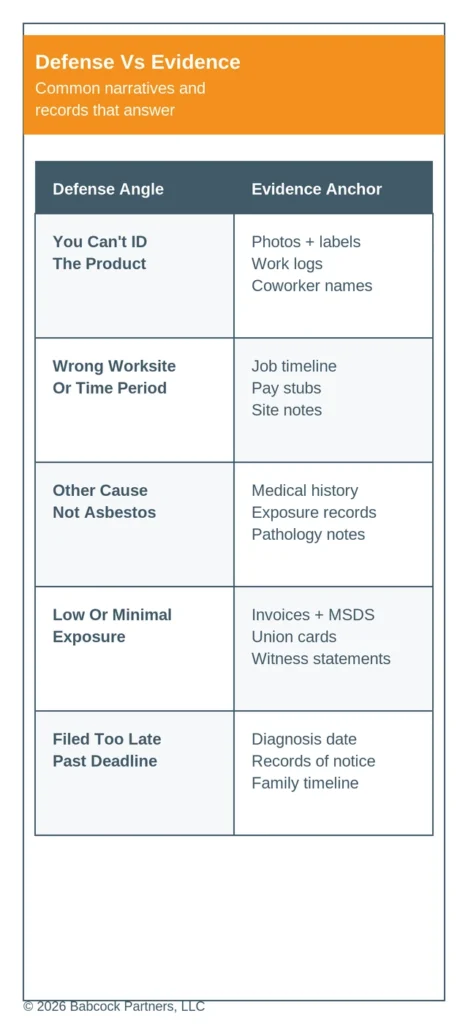
Our Louisiana mesothelioma practice page provides the claim framework. The related guide on how a Louisiana mesothelioma claim is filed explains how medical, employment, military, and product records are assembled.
Louisiana claim timing
Louisiana Civil Code article 3493.1 provides a two-year prescriptive period for delictual actions and took effect July 1, 2024. A diagnosis involving exposures decades earlier requires a claim-specific analysis of accrual, discovery, defendants, bankruptcy trusts, and any other applicable rules. Do not calculate the deadline from this general description alone.
If the person who was diagnosed dies, Louisiana survival and wrongful-death claims are separate claims addressed by Civil Code articles 2315.1 and 2315.2. The authorized family members, damages, and deadlines must be evaluated from the actual facts.
This article provides general medical and legal information, not medical or legal advice. Diagnosis and treatment decisions belong to qualified clinicians, and claim deadlines depend on the facts and law governing the particular exposure.
Last reviewed: September 26, 2026. Sources checked: September 27, 2026.
Talk with a lawyer about the medical and exposure records
If a Louisiana mesothelioma diagnosis has been confirmed and the family is trying to reconstruct a long exposure history, call (225) 500-5000 or use the case-review form below. A useful first review should identify the exact diagnosis, pathology location, treating facilities, employers, job sites, military service, household exposure, and records that may be difficult to recover.