

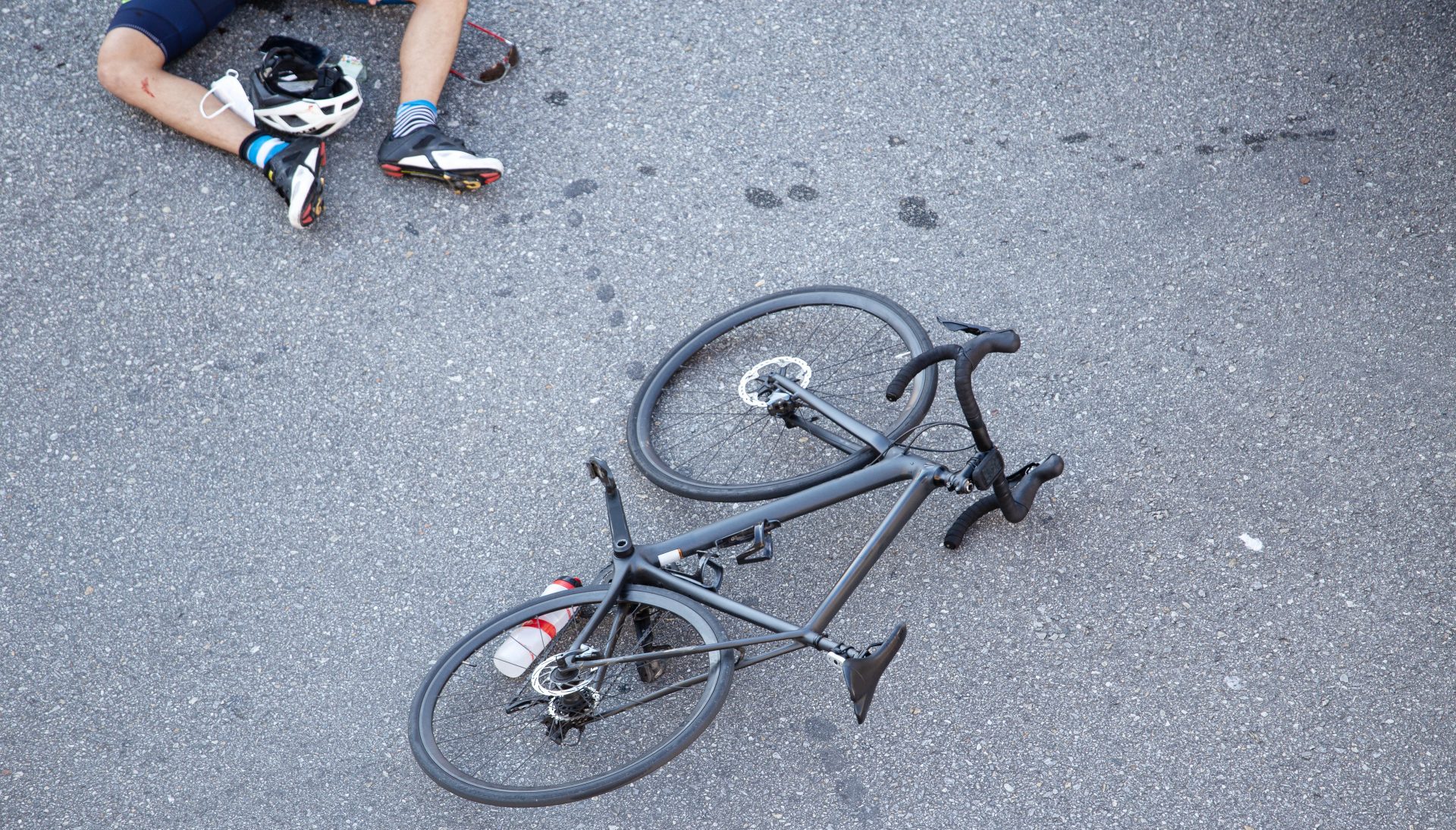
A pothole, broken pavement, loose gravel, standing water, or an unsafe work zone can contribute to a bicycle crash even when no vehicle strikes the rider. The road condition does not automatically make a city, parish, the state, or a contractor liable. A claim depends on who controlled the location, whether the condition created an unreasonable risk, what that person or entity knew or should have known, and whether the condition caused the crash.
These cases are unusually dependent on early evidence. A pothole may be patched, debris may be swept away, and warning signs may be moved before the rider knows who maintained the area.
What road conditions can matter in a bicycle claim?
Bicycles react differently to roadway defects than motor vehicles. A narrow crack or small height change that a car crosses without incident may catch a bicycle wheel or force a sudden change of direction. Conditions that may require investigation include:
- potholes, failed patches, longitudinal cracks, and uneven pavement;
- sunken utility covers, raised plates, drainage grates, and shoulder drop-offs;
- loose gravel, sand, mud, vegetation, or construction debris in the travel path;
- standing water that conceals a hole or creates a slippery surface;
- missing, misplaced, or inadequate warnings around road work; and
- bike-lane markings or surfaces that direct a rider into a dangerous conflict.
The existence of a defect is only the beginning. The analysis also considers its size, location, visibility, duration, the expected use of the area, available alternate paths, and the reason the cyclist encountered it.
A road hazard can also explain lane position
La. R.S. 32:197 generally calls for a cyclist to ride as near the right side of the roadway as practicable, but it expressly recognizes situations in which that is unsafe. A cyclist may move away from the edge to avoid surface hazards, objects, vehicles, pedestrians, animals, or a lane too narrow for a bicycle and motor vehicle to travel safely side by side.
That rule matters when a driver says the cyclist swerved into traffic. Photographs may show that the cyclist changed position to avoid broken pavement or another hazard. The related guide to cyclists’ rights on Louisiana roads explains the lane-position exceptions and the driver’s three-foot passing duty.
Who controlled the location?
The name on a nearby street sign does not necessarily identify the responsible party. A state route may pass through a city. A utility may control a cover or trench. A private business may control a parking-lot exit, while a contractor controls an active work zone.
Potentially relevant parties can include:
- the Louisiana Department of Transportation and Development;
- a parish, municipality, or another public body;
- a utility company responsible for a cover, cut, or repair;
- a road, paving, drainage, or construction contractor;
- a private owner or custodian of a driveway, parking lot, or access road; and
- a driver whose conduct forced the cyclist toward the dangerous surface.
Control can change over time. Contracts, permits, work orders, inspection records, and maintenance logs may show who had responsibility on the crash date.
Notice is often the central public-entity issue
La. R.S. 9:2800 provides that, for claims based solely on liability under Civil Code article 2317 for a defective thing in a public entity’s care or custody, the claimant generally must show that the public entity had actual or constructive notice of the particular defect before the occurrence and had a reasonable opportunity to remedy it.
Actual notice may come from a prior complaint, inspection, work order, or employee observation. Constructive notice is fact-specific and is not established merely because a defect existed. Evidence about how long the condition was present, whether it had been patched before, and whether ordinary maintenance should have detected it can matter.
Private-property claims have their own framework. Under Civil Code article 2317.1, an owner or custodian may be answerable for damage caused by a ruin, vice, or defect only when the required knowledge, preventability, and failure to use reasonable care are shown. The correct theory depends on the property, the defendant, and the facts.
How to document the road before it changes
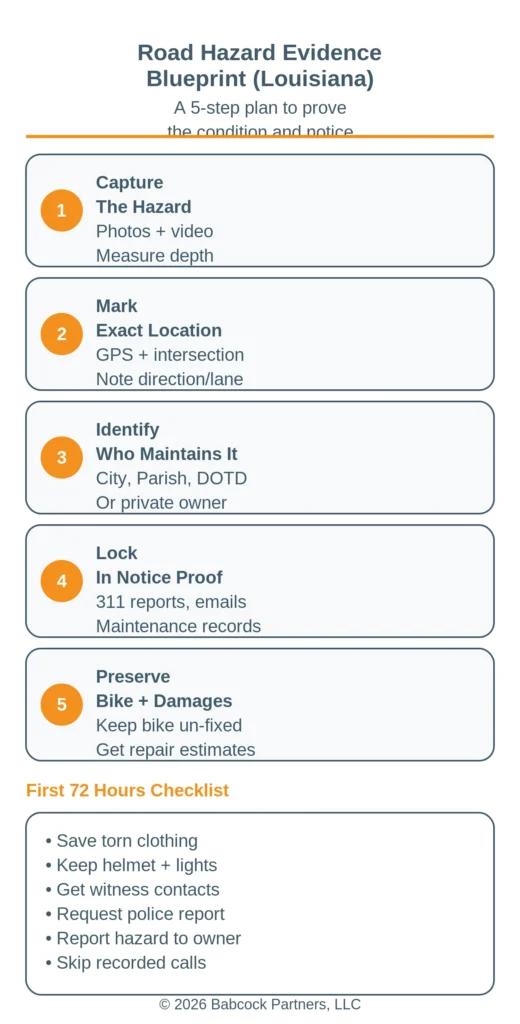
Do not place yourself in traffic or enter a work zone to gather evidence. If the location can be documented safely, preserve both the defect and its context:
- Start wide: Photograph recognizable landmarks, the approach, the travel path, and the relationship between the hazard and traffic.
- Show scale: Use a ruler or another common object, photograph depth from more than one angle, and avoid standing where scale becomes misleading.
- Record the location: Save a map pin, road name, nearest intersection, direction of travel, lane or shoulder, and date and time.
- Document warnings: Photograph cones, signs, barricades, markings, lighting, and any gap in the warning setup.
- Preserve the bicycle: Keep the bicycle, wheel, tire, helmet, lights, clothing, and electronic ride data in their post-crash condition.
- Identify witnesses: Nearby residents, workers, or regular road users may know how long the condition existed or whether repairs occurred.
If the condition is repaired, photograph the completed work from a safe location. A repair by itself does not prove earlier fault, but it may help identify the responsible crew and the area that changed.
Records can establish control, timing, and notice
Useful records may include complaint logs, 311 reports, work orders, inspection schedules, contracts, permits, lane-closure plans, photographs taken by crews, invoices, and communications about the location. A focused request tied to a date range and exact location is more useful than a broad demand for every road record.
Private businesses and contractors may also have security video, daily logs, incident reports, or jobsite photographs. Ask that relevant material be preserved promptly because ordinary retention systems can overwrite it.
Comparative fault still applies
Civil Code article 2323 governs comparative fault. For accidents occurring on or after January 1, 2026, the current statute generally bars recovery when the claimant is 51 percent or more at fault. A claimant assessed 50 percent or less at fault may have damages reduced by that percentage. Earlier accidents may be governed by the prior version.
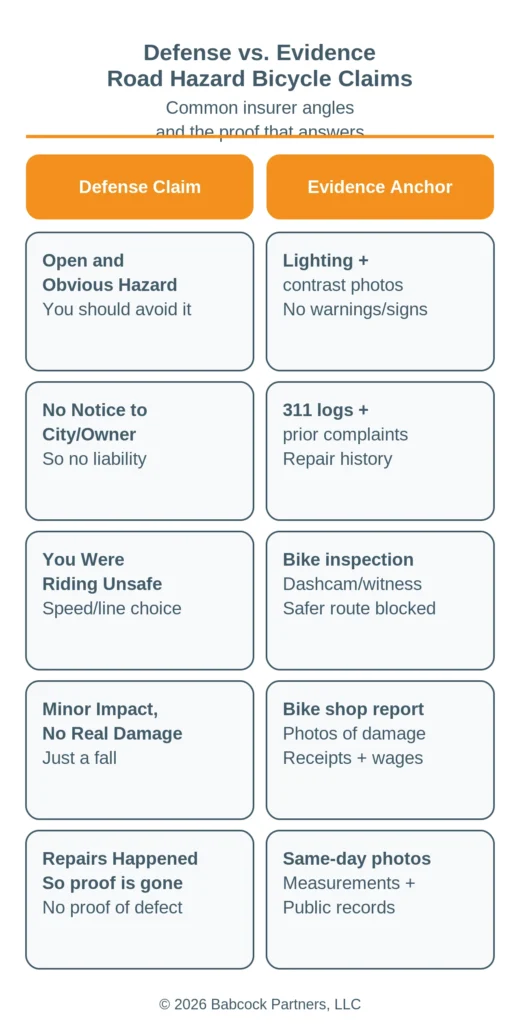
A defendant may argue that the cyclist was traveling too fast for conditions, could have used another route, failed to keep a lookout, or made an unnecessary movement into traffic. Those questions cannot be answered in the abstract. Visibility from rider height, traffic around the cyclist, the available escape path, and the condition’s contrast with the surrounding pavement can all matter.
Injury proof and road-fault proof are separate
A clear photograph of a pothole does not establish that every reported injury came from the fall. Medical records, symptom history, and the timing of treatment must connect the injuries to the crash. The bicycle and damaged gear should also be documented before repair or disposal.
The guide to determining fault in a Louisiana bicycle accident explains the broader collision-reconstruction and damages analysis.
Legal deadlines do not preserve evidence
Civil Code article 3493.1 generally provides a two-year period for delictual actions arising on or after July 1, 2024. Earlier accidents and claims against public bodies or involving another special circumstance may require a different analysis. A public-entity case can also involve procedural and service requirements that should be identified early.
Even when the general filing period is two years, the practical evidence deadline may be days. A repaired surface, erased video file, or missing contractor log can be more damaging than the passage of a few weeks on the legal calendar.
Related bicycle claim resources
The firm’s published Louisiana bicycle accident practice page explains the representation process. The separate road-rights and fault guides above provide more detail about driver duties, lane position, and collision proof.
This article provides general information, not legal advice. Responsibility for a road condition, notice, comparative fault, deadlines, and available insurance must be evaluated for the particular location and crash date.