

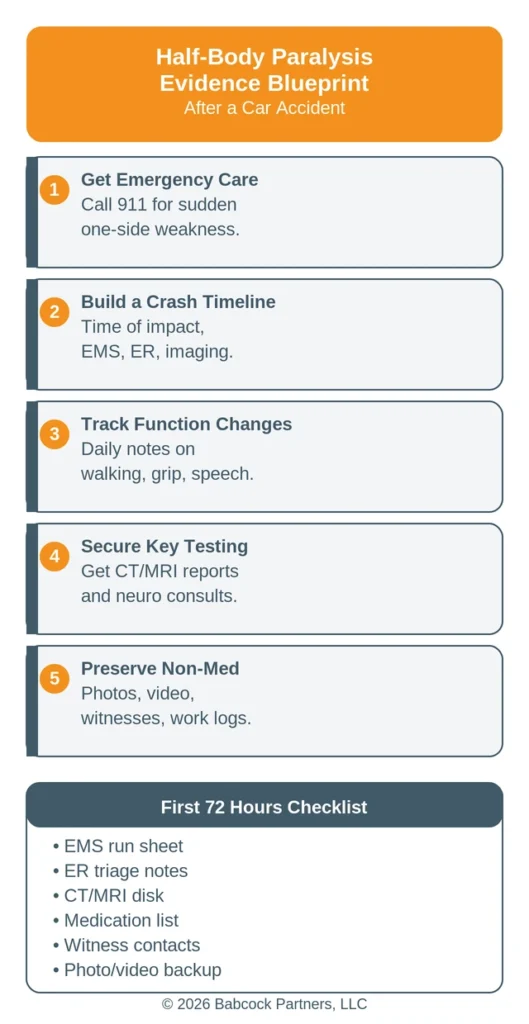
Sudden weakness or paralysis on one side of the body is an emergency. Call 911, especially if there is facial drooping, trouble speaking, confusion, or a change in vision or balance. Do not assume a recent car crash explains the symptom or makes it safe to wait. The CDC identifies sudden one-sided weakness as a possible stroke sign.
Once emergency care is underway, families often face another problem: understanding what the diagnosis means and keeping track of care across hospitals, specialists, and rehabilitation appointments. The records should help explain the person’s condition without adding another burden to an already difficult day.
What hemiplegia means
Hemiplegia means paralysis on one side of the body. Hemiparesis refers to weakness on one side. These terms describe a loss of function; they do not, by themselves, identify its cause.
Cleveland Clinic lists brain and spinal cord injuries among the possible causes of hemiplegia, along with stroke and other conditions. A collision can cause serious neurologic injury, but doctors must determine what is causing the particular person’s symptoms.
Ask the treating team which diagnosis has been established, what remains under investigation, and what changes should prompt an immediate return to emergency care. Avoid turning a suspected diagnosis into a certainty when describing the case to an insurer.
Follow the medical explanation across providers
The ambulance report may describe the first weakness. The emergency department may record an examination and imaging. A specialist may then explain what those findings mean, while therapy notes show how the condition affects movement and self-care.
Each record answers a different question. A short discharge summary may not contain the full neurologic examination, the actual images, or the rehabilitation assessment. Keep the reports and ask how to obtain the images when another provider needs them.
Johns Hopkins Medicine’s spinal cord injury guidance explains the importance of examination, imaging, treatment, and rehabilitation. The location and severity of a spinal cord injury affect the symptoms. If doctors identify brain involvement, our explanation of brain injuries after a car wreck can help with the terminology.
A scan described as reassuring should be discussed with the clinician in light of the weakness or paralysis. Ask what the test rules out and what evaluation is still needed. New or worsening neurologic symptoms require medical attention, even if an earlier visit did not settle the diagnosis.
Record the help the person actually needs
“Unable to use the left side normally” does not explain whether someone can get out of bed, dress, prepare food, write, or safely get to an appointment. Specific observations make those limitations easier to understand.
A family member can keep a short dated record of:
- which tasks required help and what kind of help was needed;
- changes in walking, balance, grip, or the ability to transfer between a bed and chair;
- equipment, therapy, and work restrictions recommended by the treating team;
- appointments, transportation difficulties, and reasons for missed care;
- improvement, setbacks, and questions to raise at the next visit.
Use ordinary language. The notes do not need to sound like a medical chart. Record what you observed, identify who observed it, and avoid guessing about a diagnosis or prognosis.
Improvement belongs in the record too. A person may regain one skill while still needing substantial help with another. Physical and occupational therapy can help people work on mobility and adapt daily tasks; the treating team is best placed to explain what progress means in that individual’s case.
Why timing and prior function matter to the claim
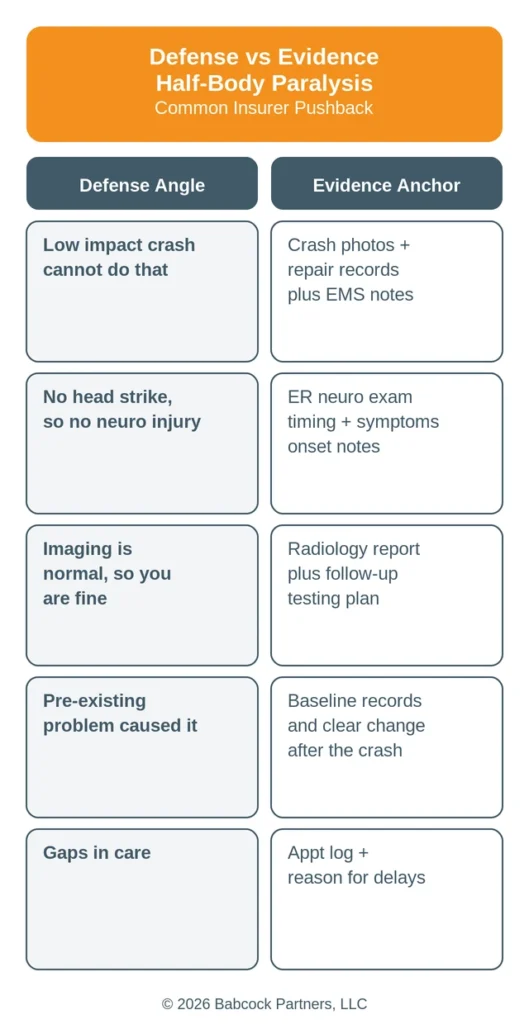
The claim needs to establish what the collision caused. That requires more than showing that weakness was reported sometime afterward. Useful evidence includes the first recorded symptoms, examination findings, the medical explanation, and a fair account of the person’s condition before the wreck.
Do not hide earlier weakness, an old injury, or a relevant medical condition. Those records provide the baseline against which a new injury or change can be evaluated. If a hospital record gets a date or fact wrong, ask the provider about its correction process rather than altering a copy yourself.
Crash photographs, witness accounts, video, and vehicle records answer a separate set of questions about how the collision happened. Preserve them while treatment continues. A family member or lawyer can often handle those requests while the injured person concentrates on care.
Our Baton Rouge spinal cord injury guidance discusses these claims, and our brain injury practice addresses cases involving brain trauma. The medical diagnosis should guide which issues need investigation.
Before agreeing to a final settlement
An early medical record may say little about how much assistance someone will need months later. Before a final release, consider whether the treating providers have explained the prognosis, ongoing therapy, work limits, and likely care needs well enough to evaluate the claim.
That does not mean every outcome can be predicted. It means identifying what is known, what remains uncertain, and what evidence supports the claimed losses. Our catastrophic injury guidance addresses claims involving substantial long-term limitations.
For example, records showing missed work or help with personal care can make the practical effects of paralysis clearer than a diagnosis label alone. Keep receipts and written restrictions alongside the medical records. Do not estimate a lifetime need on your own or assume an early improvement eliminates the need for further evaluation.
Legal deadlines continue while treatment develops
Louisiana fault-based injury claims draw on Civil Code article 2315. The seriousness of the injury does not remove the need to prove fault, causation, and damages.
Article 3493.1 generally provides two years for delictual claims arising on or after July 1, 2024, starting when injury or damage is sustained. Earlier crashes and special claims require separate analysis. Do not assume treatment, rehabilitation, or negotiations suspend the deadline.
Article 2323 governs comparative fault. Its version effective January 1, 2026 generally bars recovery at 51% or greater claimant fault and reduces recovery below that threshold. Which version applies depends on the event date.
If you need help with a Louisiana crash claim involving paralysis, call (225) 500-5000 or use the case review form below. You can begin with the crash date, the facilities providing care, and the insurer’s correspondence. You do not need every record before asking for help.