

Mesothelioma symptoms often resemble symptoms caused by more common conditions. Shortness of breath, chest discomfort, cough, fatigue, weight loss, abdominal pain, and swelling can have many explanations. A symptom list can help a doctor understand what has changed, but it cannot establish a mesothelioma diagnosis.
The useful first step is to describe the symptoms precisely and obtain appropriate medical evaluation. If asbestos exposure is possible, give the medical team a separate work and environmental history. The two records answer different questions: one documents the patient’s health, while the other may help explain why mesothelioma or another asbestos-related disease is being considered.
Symptoms are a reason for evaluation, not a diagnosis
The National Cancer Institute describes mesothelioma as a cancer of the tissue lining the lungs, chest wall, and abdomen. Its mesothelioma overview identifies asbestos exposure as the major risk factor, but exposure alone does not show that a person has the disease.
Likewise, no single symptom proves mesothelioma. A clinician may need to consider infections, heart or lung disease, other cancers, digestive conditions, medication effects, and many other possibilities. Tell the clinician when each symptom began, whether it is getting worse, and what activities it now limits.
Symptoms associated with pleural mesothelioma
Pleural mesothelioma affects the lining around the lungs and is the most common form of the disease. Symptoms that may lead to evaluation include:
- shortness of breath or a noticeable decline in breathing capacity;
- chest or rib pain;
- a persistent cough;
- unexplained fatigue or weakness;
- loss of appetite or unexplained weight loss; and
- fluid around a lung, sometimes called a pleural effusion.
These symptoms can develop gradually. A person may first notice that walking, climbing stairs, lying flat, or completing ordinary work has become harder. Record those functional changes instead of writing only that breathing is “bad.” The date and circumstances make the description more useful to the treating team.
Symptoms associated with peritoneal mesothelioma
Peritoneal mesothelioma affects the lining of the abdomen. Possible symptoms include:
- abdominal swelling or an increase in abdominal size;
- persistent abdominal pain or pressure;
- nausea, appetite changes, or feeling full unusually quickly;
- unexplained weight loss;
- changes in bowel habits; and
- fatigue or weakness.
Location, histologic cell type, and stage are different parts of a diagnosis. Our guide to the types of mesothelioma explains those distinctions without treating symptoms as a substitute for pathology.
When symptoms need prompt or emergency care
Do not wait for a legal consultation before seeking medical care. Severe or rapidly worsening shortness of breath, new significant chest pain, coughing blood, fainting, confusion, blue or gray lips, or another alarming change may require emergency evaluation. Call 911 or follow the treating clinician’s emergency instructions when immediate help is needed.
Symptoms that are not an emergency still deserve an appointment when they persist, recur, or interfere with daily activity. Tell the clinician about known or suspected asbestos exposure, but avoid assuming that exposure has already established the cause. A complete medical history should include smoking history, prior lung or heart conditions, cancer history, medications, and other relevant risks.
Prepare a short, accurate symptom record
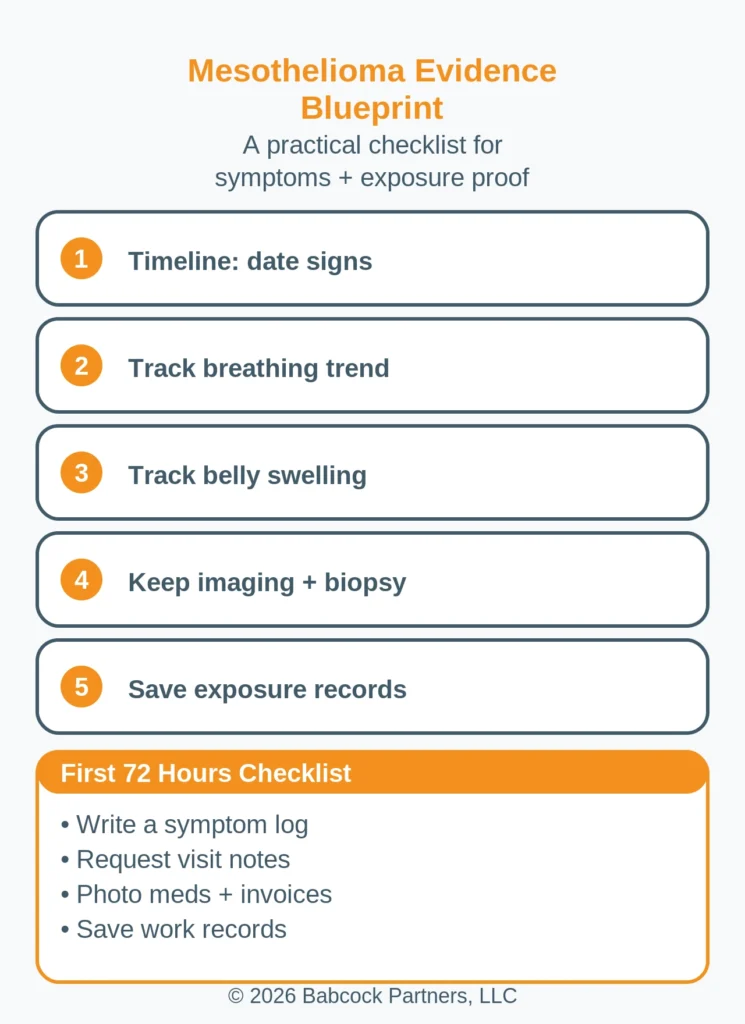
A useful symptom record does not need to be elaborate. Keep one dated document and update it when something changes. For each symptom, note:
- the approximate start date;
- whether it appeared suddenly or gradually;
- how often it occurs and how long it lasts;
- what makes it better or worse;
- what work, household, sleep, or recreational activity it limits;
- which clinician was told and when; and
- what testing, treatment, or follow-up was recommended.
Bring a current medication list and copies of records from other facilities when available. Do not change medication, oxygen, diet, or activity based on a general internet checklist. Those decisions belong with the medical team.
What happens after symptoms raise concern
NCI’s diagnosis and prognosis guide explains that the evaluation may involve imaging, laboratory work, and a biopsy. Imaging can identify fluid, thickening, or a mass, but pathology is generally needed to determine whether cancer is present and what type it is.
Ask for the complete reports, not only a portal summary. The working medical file may include:
- chest X-ray, CT, PET, MRI, or ultrasound reports;
- copies of the actual imaging when another specialist may review it;
- fluid-drainage and cytology reports;
- biopsy, operative, and pathology reports;
- pulmonology, oncology, surgery, and primary-care notes; and
- referrals, treatment plans, and follow-up instructions.
A suspected diagnosis, a confirmed diagnosis, and a second pathology review are not interchangeable. Record which one the clinician actually communicated. Our article on mesothelioma diagnosis and treatment options explains the later stages of that process.
Build the exposure history separately
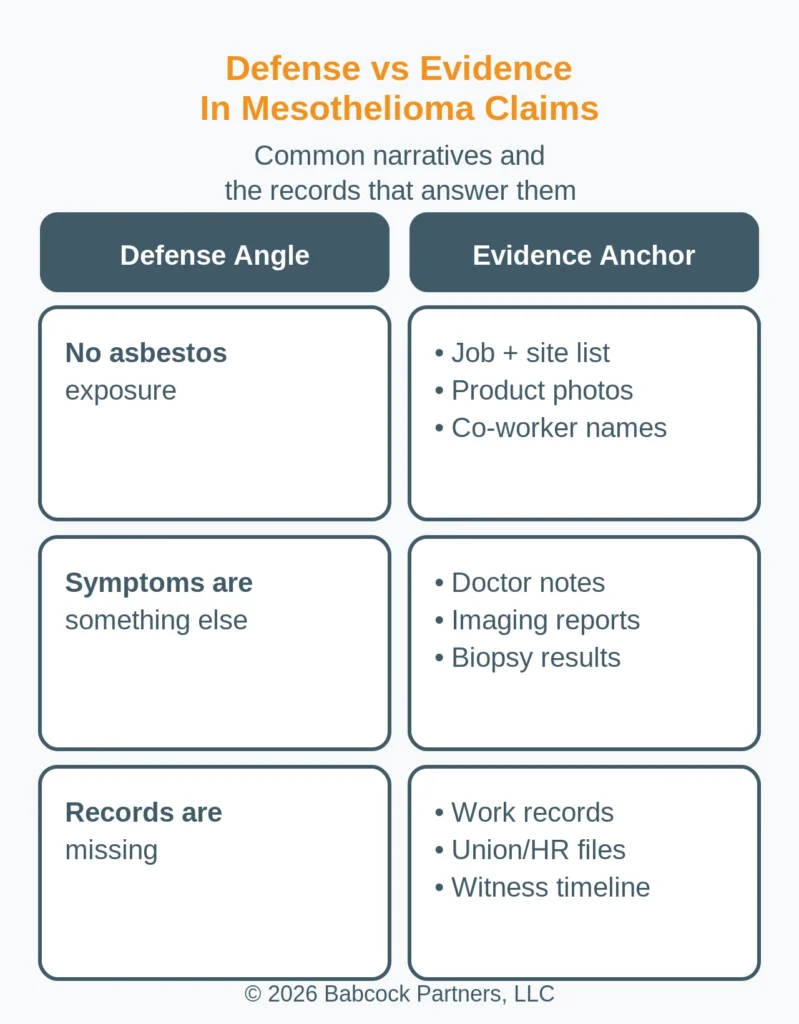
Asbestos-related disease can appear long after the exposure occurred. ATSDR’s clinical material emphasizes the importance of an occupational and environmental exposure history when evaluating illnesses with long latency periods. A present symptom does not identify an employer, jobsite, product, or responsible company.
Start with a chronological list of jobs, military service, residences, and major renovation projects. For each job, identify the employer, location, department, dates, actual tasks, nearby trades, and materials handled or disturbed. Include household exposure if a worker regularly returned home with dusty clothing, tools, or equipment.
Do not guess at product names or fill gaps with assumptions. Mark uncertain information as uncertain. Payroll files, union records, Social Security work history, personnel records, photographs, invoices, coworkers, and site documents may later supply details that memory cannot.
The firm’s articles on asbestos exposure versus mesothelioma, warning signs of asbestos-related disease, and secondary asbestos exposure address those separate questions in more detail.
Louisiana claim timing cannot be calculated from a symptom checklist
Louisiana Civil Code article 3493.1 states a general two-year prescriptive period for delictual actions arising from injury or damage sustained on or after July 1, 2024. A mesothelioma claim may involve exposures, disease development, discovery, defendants, survival or wrongful-death issues, and other dates that require separate legal analysis. The current article should not be applied mechanically to an exposure that occurred decades earlier.
Preserve records while that analysis is completed. Employers may close, sites may change, witnesses may become difficult to locate, and old documents may be destroyed under ordinary retention policies. Preservation is useful even when the family does not yet have a complete exposure history.
The firm’s Baton Rouge mesothelioma practice page describes the medical and exposure information considered during an initial claim review.
Discuss a diagnosis and exposure history
If a Louisiana patient has a confirmed or suspected mesothelioma diagnosis, call (225) 500-5000 or use the case-review form below. Bring whatever pathology, imaging, employment, or military records are readily available, but do not delay medical care or an initial claim review because the file is incomplete.