

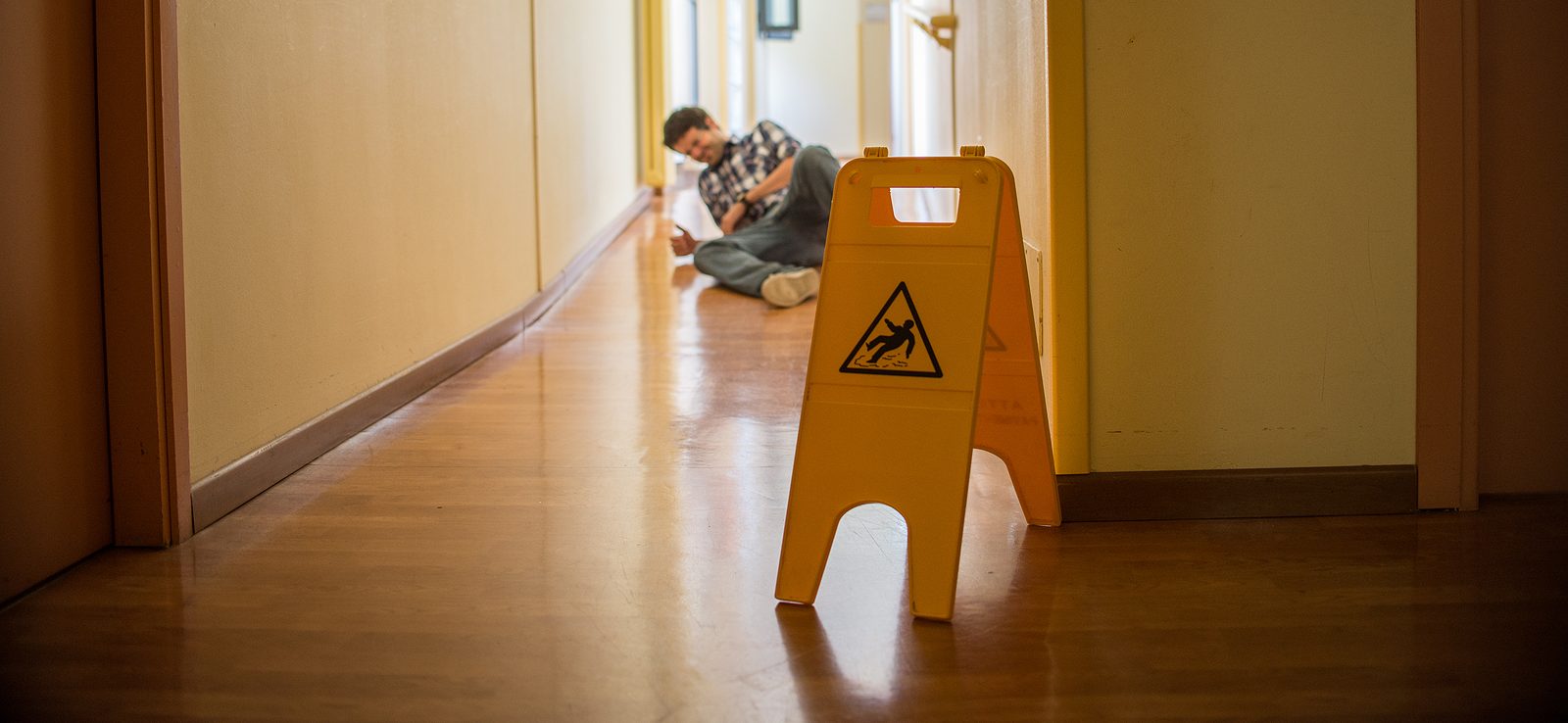
A fall in a store does not make the store automatically liable. Louisiana law asks what made the area unsafe, whether the business created the condition or had enough time to discover it, and whether that condition caused the injury. The strongest cases usually begin with ordinary details: where the liquid came from, who passed through the area, when an inspection occurred, and what the video shows before and after the fall.
Those details can disappear quickly. A spill may be cleaned within minutes, surveillance may be overwritten, and employees may no longer remember which inspection occurred at what time. Preserving the first records is often more useful than collecting broad statements about what a business should have done.
When does Louisiana’s merchant statute apply?
Louisiana Revised Statute 9:2800.6 applies when a person lawfully on a merchant’s premises seeks damages from a fall caused by a condition on or in the premises. The statute defines a merchant as a person or business whose operations include selling goods, food, wares, or merchandise at a fixed location. It also includes an innkeeper in specified circumstances.
A grocery store, retailer, restaurant, or hotel may fit that definition. A fall at an apartment complex, private office, public building, or another property may involve a different premises-liability analysis. Identifying the property operator and the party that controlled the area is therefore an early step, not a formality.
What must a customer prove?
The merchant statute requires proof of all three of the following:
- the condition presented an unreasonable and reasonably foreseeable risk of harm;
- the merchant created the condition or had actual or constructive notice of it before the fall; and
- the merchant failed to exercise reasonable care.
Each element needs evidence. A photograph may establish that a puddle existed, but it may not show how long the puddle had been there. An inspection policy may describe a reasonable system, but the records must still show whether employees followed it on that day. Conversely, the statute says that the absence of a written or verbal cleanup procedure is not enough by itself to prove a failure to exercise reasonable care.
Why constructive notice is often the central issue
Constructive notice means that the condition existed for enough time that the merchant would have discovered it through reasonable care. The statute requires a temporal showing. It also states that an employee’s presence near the condition does not, by itself, establish constructive notice unless the evidence shows that the employee knew or should have known about it.
No single fact establishes the necessary time in every case. Useful proof may include:
- surveillance showing the area before the fall;
- inspection, cleaning, and employee assignment records;
- witnesses who saw the condition earlier;
- receipts, phone records, or other timestamps;
- tracks, footprints, cart marks, drying, dirt, or changes in the substance; and
- prior complaints or repair records involving the same recurring condition.
The point is not to guess from appearance. A sticky or dirty substance may support an inference when considered with other evidence, but its appearance alone may not reliably establish an exact duration. The article on what a customer must prove after a fall in a Louisiana store examines the notice requirement in more detail.
Creation and actual notice are different routes
A claimant does not always need to prove how long a condition existed. If an employee created the hazard, or if the business actually received a report about it, the notice analysis changes. Video of an employee placing a leaking product on a shelf, a work order for a recurring roof leak, or a customer’s earlier warning may be more direct than trying to estimate duration.
The source of the condition matters. Water near an entrance on a rainy day, produce on a grocery floor, grease near a restaurant service area, a curled mat, and a broken display can involve different inspection practices and different evidence. The question is whether the particular risk was reasonably foreseeable and handled with reasonable care.
What should be preserved after a fall?
Medical needs come first. After that, preserve the scene and the first accounts without exaggeration or reconstruction.
- Photograph or record the hazard, surrounding floor, lighting, warning signs, displays, and the route of travel.
- Keep the shoes and clothing in their post-incident condition.
- Obtain the business name, address, exact location, and names of employees or witnesses.
- Ask that an incident report be prepared and keep the copy or report number provided.
- Save receipts, loyalty-account records, messages, and photographs with their original timestamps.
- Identify cameras that may show the hazard forming, prior foot traffic, inspections, the fall, and the cleanup.
- Give medical providers an accurate history and keep records of symptoms, treatment, restrictions, and missed work.
A focused preservation request should identify the date, time range, location, and record types. Waiting for an insurer to investigate can be risky because the business may retain video for only a short period. The guide to preserving witness information in the first 72 hours explains how to record names and observations without coaching anyone’s account.
Reasonable care depends on the actual circumstances
The law does not demand that a floor remain perfectly safe every second. It asks whether the merchant used reasonable care. Relevant facts can include the frequency of inspections, the type of merchandise, customer traffic, weather, recurring leaks, employee responsibilities, warning placement, and the time between discovery and cleanup.
A warning sign is evidence, but it does not decide every case. Its location, visibility, wording, and relationship to the customer’s path matter. The same is true of an inspection log. A completed form may support the merchant, but timestamps, video, and testimony can show whether the recorded inspection actually covered the location and occurred when claimed.
Comparative fault can reduce or bar recovery
Businesses often argue that the customer was distracted, chose an unreasonable route, ignored a warning, or failed to see an obvious condition. Those issues are evaluated with the merchant’s conduct, not in isolation.
Civil Code article 2323 requires allocation of fault. For injuries occurring on or after January 1, 2026, a claimant who is 51 percent or more at fault cannot recover, while a claimant who is 50 percent or less at fault may recover damages reduced by the assigned percentage. The prior version can govern an earlier fall, so the incident date matters.
Objective evidence often resolves these arguments better than labels such as “open and obvious.” Video can show what was visible from the customer’s approach, whether displays blocked the view, where signs stood, and how other customers reacted to the same condition.
Injury and causation require their own proof
Proving a dangerous condition does not prove that every medical problem resulted from the fall. Medical records, diagnostic findings, the mechanism of the fall, prior health history, and the course of recovery must support causation. A delayed diagnosis does not automatically defeat a claim, but unexplained gaps and inconsistent histories give the defense material to challenge it.
Documenting function can also matter. Work restrictions, assistance with ordinary activities, therapy progress, and the ability to return to previous routines may explain the practical effect of an injury more clearly than a list of diagnoses alone.
How long is there to file?
Civil Code article 3493.1 provides a two-year prescriptive period for delictual actions and took effect July 1, 2024. A fall before that date can be governed by the earlier one-year rule, and special facts can affect the analysis. An internal claim, incident report, or settlement discussion does not necessarily stop the filing period.
The deadline is only one reason to act promptly. Evidence preservation often becomes harder long before a lawsuit is due.
Where can a Louisiana customer learn more?
The firm’s published Baton Rouge slip and fall practice page discusses surveillance, inspection records, and merchant notice. A case-specific review should start with the property type, incident date, available evidence, and medical history rather than an assumption that every fall follows the same rule.