

A diver may surface with an injury even when no one topside saw an accident. The dive profile, communications, equipment condition, and first symptoms can explain different parts of what happened. A report that says only “completed welding assignment” may leave out the facts that matter to both treatment and an injury claim.
Underwater welding combines hot work with the hazards of commercial diving. Pressure changes, electrical current, cold exposure, entanglement, moving structures, and an interrupted breathing-gas supply can create serious risks. Which hazard caused an injury requires investigation; the job title alone does not establish either the diagnosis or who was responsible.
After a dive, serious symptoms come before paperwork
Call 911 or activate the site’s emergency response for trouble breathing, chest pain, new weakness or confusion, seizures, or loss of consciousness after a dive. Tell responders that the person was diving and provide the depth, time, breathing gas, ascent information, and symptom onset if known. Do not delay treatment while trying to obtain a complete log or contact a lawyer.
The CDC’s discussion of dive-related injuries distinguishes decompression sickness from arterial gas embolism. Both can require urgent specialist evaluation. Its recreational-diving guidance is not a substitute for commercial procedures or a medical decision about a particular diver.
Merck’s decompression-sickness guidance explains why the dive history and clinical findings matter: CT and MRI do not reliably establish or exclude the condition. A normal scan does not, by itself, settle the issue. Leave diagnosis, recompression, transport, and return-to-dive decisions to qualified clinicians.
Electrical injury also deserves medical attention even when there is little visible skin damage. Mayo Clinic’s electrical-shock guidance identifies possible internal injury and warns against touching someone still in contact with current. Rescue and electrical isolation belong with trained responders using the site’s emergency procedures, not an improvised attempt to retrieve evidence.
Reconstruct the dive that actually occurred
Start with the actual sequence: entry, descent, work, any interruption, ascent, recovery, and the first symptoms. Distinguish what you remember from what another crew member told you. Preserve original notes and messages; if a time was estimated, identify it as an estimate.
OSHA’s post-dive requirements identify records such as the dive team, date, location, mode, work, conditions, maximum depth, and bottom time. Some dives require additional profile and decompression information. A suspected decompression-sickness incident also calls for symptom and treatment documentation and a written assessment of the incident under the regulation.
Compare those records with dispatch instructions, the job safety analysis, tender notes, available recordings, and treatment records. A plan describes what was intended; a log should describe what occurred. Neither document should be rewritten to make the two agree after an injury.
Scroll horizontally to see all columns. Use the arrow keys when the table is focused.
| Question | Potential records | Important limit |
|---|---|---|
| Did the dive follow the planned profile? | Depth and time data, gas changes, decompression information, and prior dives | An apparently compliant profile does not rule out a medical problem. |
| Was there a communication, power, or equipment interruption? | Tender notes, recordings if made, equipment identifiers, inspection and repair records | A missing record is not proof that a particular failure occurred. |
| When did the symptoms begin? | Post-dive observations, emergency calls, medic notes, hospital and specialist records | A later diagnosis and the first symptom are different events. |
Identify the equipment without altering it
Record the welder, leads, connectors, helmet, umbilical, communications equipment, and other components involved, including identifying numbers when safely available. Ask that relevant equipment and records be preserved. Do not energize, dismantle, repair, or test equipment yourself, enter a restricted worksite, or interfere with emergency operations.
Section 1910.422 addresses dive communications and underwater welding, including control of the current supply, grounding and insulation, and precautions for compartments that may contain flammable vapors. These are questions for a qualified investigation: what arrangement was used, who controlled it, and what do the records show? The regulation is not proof that a violation caused this injury.
The employer’s safe practices manual can help identify assigned responsibilities and emergency procedures. Applicability must be checked against OSHA’s scope provisions, the diving mode, and the operation involved.
Retention periods differ. Under section 1910.440, ordinary dive records generally have a one-year retention period, while records involving decompression sickness and the associated assessments have five-year requirements. Some equipment records are retained only as current entries or tags until the equipment is withdrawn. Other recordkeeping rules and litigation-preservation duties may also apply. A minimum retention period is not permission to destroy evidence relevant to an anticipated claim.
A welding assignment does not decide maritime status
The same trade can be performed by a vessel crew member, a shore-based contractor, or a worker on an offshore resource project. Preserve the employment history, vessel assignments, precise work location, and identities of the employer and other companies. Our Jones Act seaman-status article explains why the nature and duration of a vessel connection matter.
The Longshore and Harbor Workers’ Compensation Act covers qualifying maritime employment and locations, with exclusions including vessel masters and crew. It separately addresses employer exclusivity and vessel negligence. Our article on Longshore coverage explores those questions; it does not mean every underwater welder is a longshore worker. The Department of Labor’s overview also explains the Act’s offshore and other extensions.
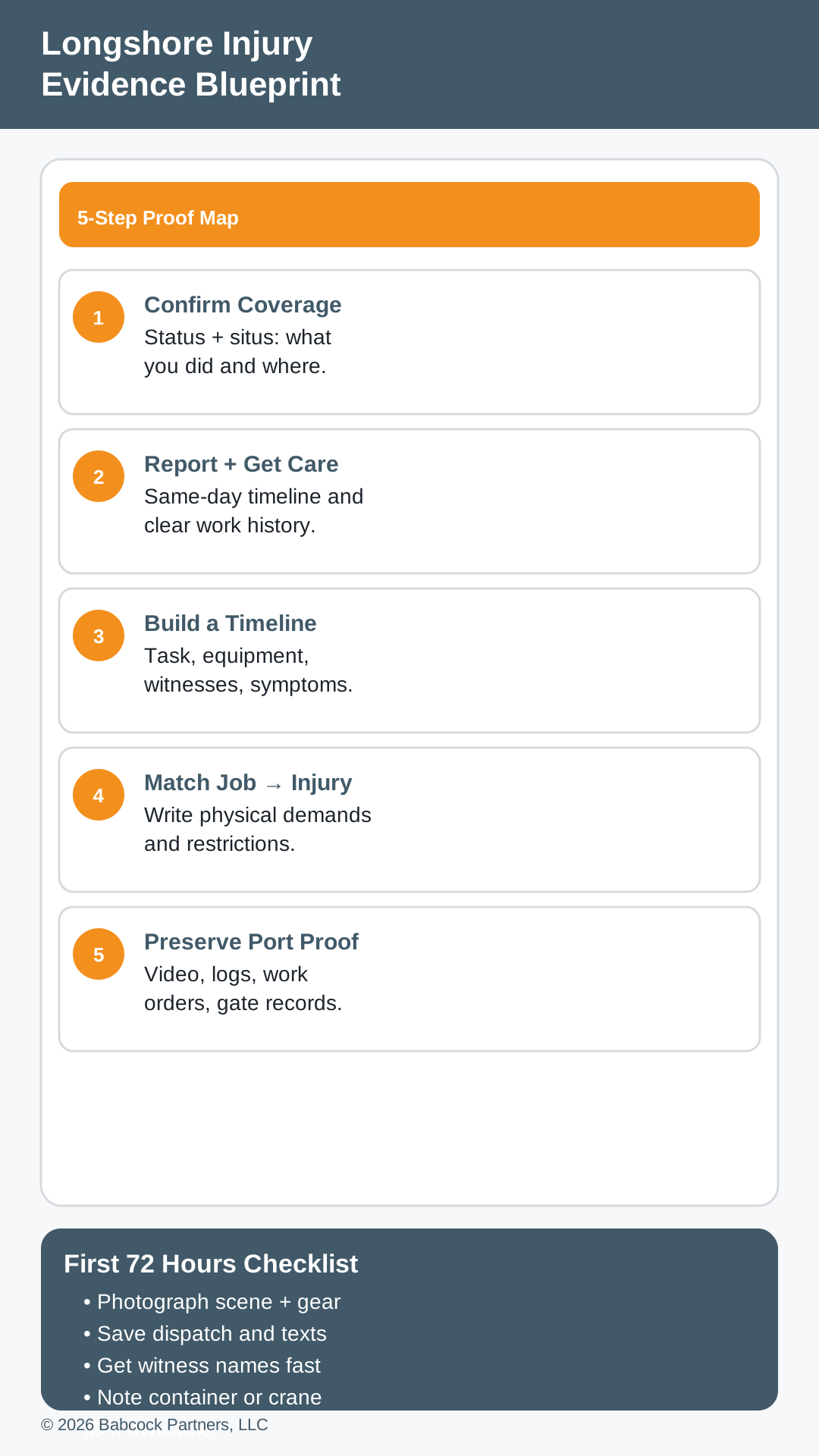
Identify each company’s actual role rather than assuming that a company present at the job owes every duty. Who supplied and maintained the equipment? Who directed the dive? Who controlled the vessel or structure? A benefits claim and a negligence or defective-equipment claim can require different proof and be subject to different defenses.
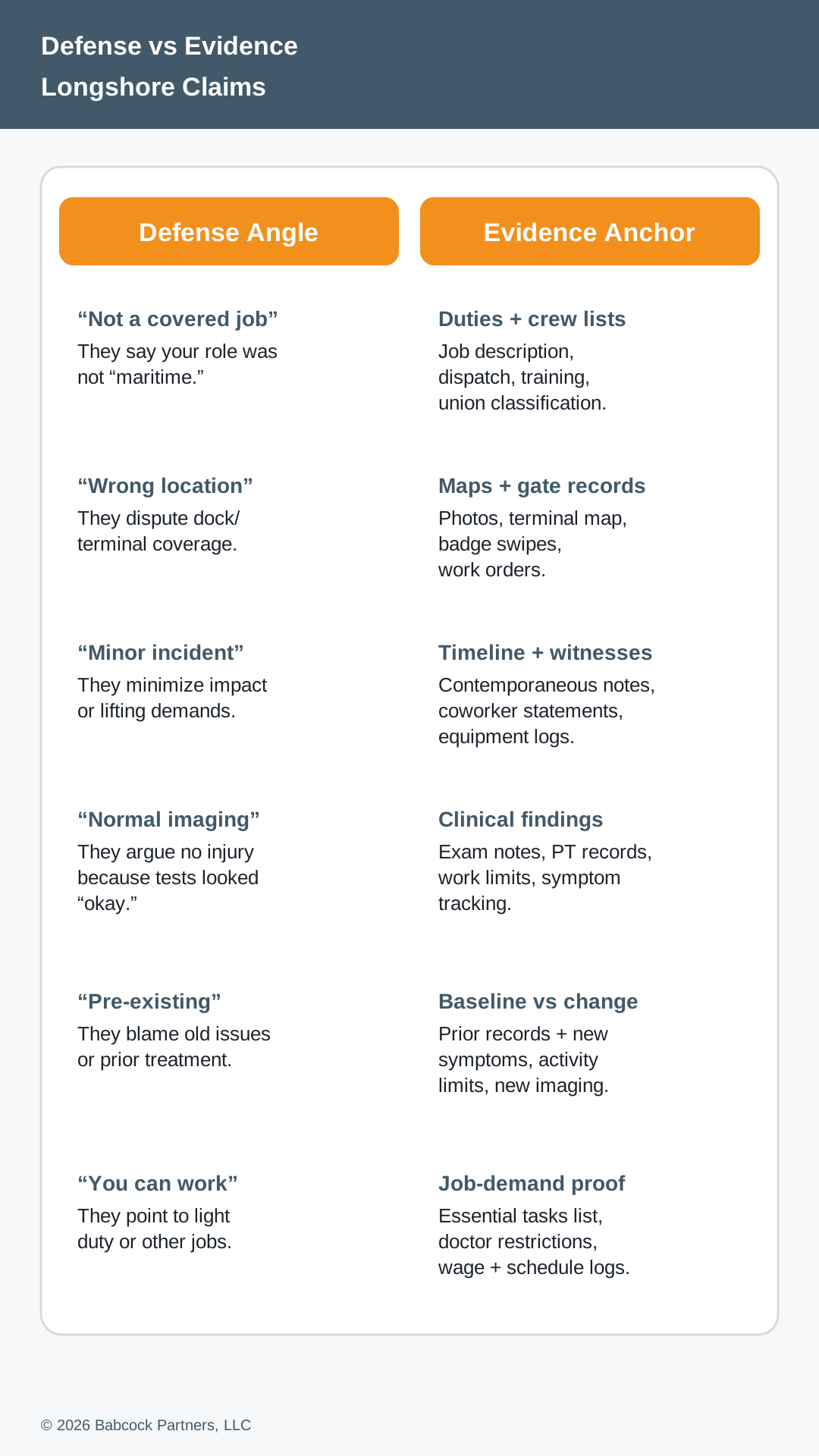
Check deadlines under the law that governs the claim
Do not assume Louisiana’s ordinary personal-injury deadline or comparative-fault bar governs a federal maritime or Longshore claim. The Longshore Act has separate notice and claim-filing provisions in sections 12 and 13, including awareness rules and exceptions. Reporting to a supervisor is not necessarily the same as filing the required claim.
Where Louisiana law actually governs a delictual action, Civil Code article 3493.1 generally supplies two years for actions arising after July 1, 2024; earlier events and special rules require separate review. Article 2323’s January 1, 2026 change generally bars recovery at 51 percent negligence for conduct governed by the amendment. Its effective-date and intentional-tort qualifications matter. Neither state rule should be applied to a diving claim before determining the governing law.
Our offshore and maritime injury practice reviews the assignment history, companies involved, medical course, and available dive records together. Bring what you have, including restrictions and missed-work records. A missing log should prompt a targeted request, not delay medical care or the review of a filing deadline.
Sources checked: September 29, 2026. Last reviewed: September 28, 2026.