Editorial & Legal Accuracy Notice (Louisiana)
This blog contains general legal and safety information and is not legal advice. Laws and deadlines can change, and outcomes depend on specific facts.
Last reviewed / updated: February 27, 2026 Reviewed, updated, and authored by: Stephen Babcock, Louisiana trial lawyer
This page explains what a Mansfield bar is, why many trailers have underride guards, and what steps help protect evidence after a Louisiana truck underride crash. It also explains how liability is evaluated when an underride guard fails.
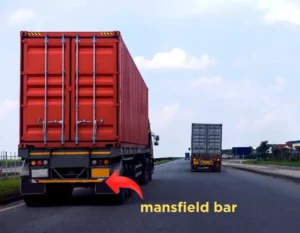
People call it a “Mansfield bar,” but the formal term is a rear underride guard. It is the horizontal bar at the rear of many trailers that is meant to reduce the risk of a car sliding under the trailer.
Our goal is to explain this safety device in plain English and show you what matters most in the first few days after a crash. We are not built for volume. We are built for leverage. Speed + evidence preservation + insurer-insider knowledge + trial-ready preparation = The Babcock Benefit. Here, “insurer-insider knowledge” means understanding how claims get evaluated and which details insurers use to shift fault, so we focus early on photos, inspection access, and preserving video before it disappears.
If you were hit by a commercial truck, you may also want to start with our Practice Areas hub or our Truck Accidents page for broader context. This blog stays focused on underride guard basics and the evidence questions that often decide the outcome.
If you are inside the first 72 hours, call (225) 500-5000 or use the free case review form before evidence changes.
Firm links: Client Reviews | Contact | Locations
What is a Mansfield Bar and why do Trucks Have Them?

A Mansfield bar is the steel bar on the back of many trailers, designed to reduce the risk of a passenger vehicle riding under the trailer in a rear-end collision, which NHTSA describes as truck underride. On many trailers and semitrailers, federal rules require a compliant rear impact guard and specify basic placement requirements in 49 CFR 393.86.
- Where it is: On the rear of a trailer, low to the ground, behind the rear wheels.
- What it aims to do: Provide a barrier that helps keep a car from sliding under the trailer.
- Other names: Rear underride guard, rear impact guard, or ICC bar.
- What it does not do: It does not guarantee crash protection, and it does not address many side underride scenarios.
In a real crash, the guard’s condition matters as much as its presence. A bent, missing, modified, or poorly positioned guard can act like no guard at all.
Are Mansfield Bars Required on all Trucks and Trailers?
Not on all trucks, but many trailers and semitrailers must be equipped with a rear impact guard that meets federal requirements under 49 CFR 393.86. For many covered trailers, the related federal safety standards set installation requirements for rear impact protection under 49 CFR 571.224.
| Rule | What it controls | Why it matters in a crash |
|---|---|---|
| 49 CFR 393.86 | Rear impact guard requirements for many trailers and semitrailers operating in commerce | Helps frame the compliance questions: guard present, positioned, and consistent with applicable requirements |
| 49 CFR 571.223 | Rear impact guard performance requirements (strength and energy absorption testing) | Raises guard failure issues when the guard shears, detaches, or folds in a way that suggests performance concerns |
| 49 CFR 571.224 | Rear impact protection installation requirements for many trailers and semitrailers | Supports the “what should have been on this trailer” analysis for covered equipment |
| NHTSA Truck Underride | Research overview and underride context | Helps explain why underride remains a safety focus and why guard design and crash conditions matter |
Straight trucks and box trucks can have different rear protection designs, and some specialized equipment can raise coverage or exemption questions. The practical question is whether the specific trailer involved was required to have a compliant guard and whether that guard was missing, damaged, or altered.
Why can Underride Still Happen Even With a Mansfield Bar?
Underride risk depends on speed, angle, vehicle height, and where the passenger vehicle hits, and NHTSA research has noted that rear corner impacts are more prone to passenger compartment intrusion in underride scenarios. NHTSA’s underride guard effectiveness report discusses how crash geometry can change how a guard performs. Side underride is a separate problem, and NHTSA has addressed the topic in its Report to Congress on side underride protection.
- Offset or corner impact: The car hits near the corner where intrusion risk can be higher.
- Guard height mismatch: The car’s front end dives under the trailer before the guard engages.
- Guard deformation: The bar bends, tears, or detaches under load.
- Missing or altered guard: Prior damage, modifications, or poor maintenance leave gaps.
- Roadway conditions: Hard braking, wet pavement, or a sudden stop can change impact angle and engagement.
Example: A driver rear-ends a trailer that is turning or changing lanes, and the first point of contact is the rear corner. In that scenario, the key evidence often becomes the impact location, crush pattern, and the guard’s post-crash condition.
Leverage Note: This is why we push to identify the trailer and preserve it before it is repaired or moved again. A quick inspection can capture guard condition, height, and markings while they still match the crash.
What Injuries are Common in Underride Crashes?
Because underride can involve severe intrusion, head injuries and concussions are a common concern, and the CDC lists concussion symptoms that can include headaches, dizziness, and trouble concentrating. When there is neck or back trauma, warning signs can include weakness, numbness, or breathing issues, which Johns Hopkins Medicine describes in its spinal cord injury overview.
| Injury concern | Common signs people report | Authoritative source |
|---|---|---|
| Concussion or mild TBI | Headache, dizziness, light sensitivity, fogginess, memory issues | CDC concussion symptoms |
| Whiplash and soft tissue neck strain | Neck pain, stiffness, reduced range of motion, headaches | Cleveland Clinic whiplash |
| Spinal cord injury red flags | Weakness, numbness, loss of function, breathing problems | Johns Hopkins Medicine SCI |
| Fractures | Swelling, bruising, deformity, severe pain with movement | AAOS OrthoInfo fractures |
| Internal bleeding concerns | Faintness, vomiting blood, blood in stool or urine, worsening pain | MedlinePlus bleeding overview |
| Blunt abdominal trauma | Worsening abdominal pain, tenderness, signs of shock | Merck Manual abdominal trauma |
Head symptoms can show up hours later, so write down dizziness, nausea, light sensitivity, or memory issues. The CDC notes that concussion symptoms can include headaches and trouble concentrating.
Do not assume you are fine because you had a “normal” early scan, especially with concussion-type symptoms. Mayo Clinic explains that concussion diagnosis relies on symptoms and evaluation, not just imaging results.
Internal bleeding can be hard to spot at the scene, but worsening belly pain, faintness, or vomiting blood can signal an emergency. The MedlinePlus medical encyclopedia lists warning signs such as blood in vomit or stool, and other bleeding symptoms.
If you have neck pain after a crash, it is common for symptoms to evolve over the next day or two as inflammation builds. The Cleveland Clinic explains whiplash as a neck strain that can follow sudden force in a motor vehicle crash.
What should you do right after an Underride Crash in Louisiana?
Focus first on safety and medical care, then do what you reasonably can to preserve evidence while details are fresh. The actions you take in the first day or two can affect what proof exists later.
- Call 911 and ask for medical help if anyone has head, neck, chest, or abdominal symptoms.
- Get the truck and trailer information if you can do it safely, including the carrier name, unit numbers, and license plates.
- Take wide photos first, then close-ups, including the rear of the trailer, the guard, and any markings or damage.
- Get witness names and numbers, especially people who stopped or who were behind you.
- Seek medical evaluation the same day if you hit your head, have neck pain, or feel “off,” even if you think it is minor.
- Preserve your own evidence by saving dash cam clips, phone photos, and any messages from insurers or towing companies.
Try to avoid repairs or disposal decisions until you have copied your photos and documented the damage, because those decisions can erase the best proof. If your vehicle is towed, ask where it will be stored and keep the tow paperwork, because storage yards and salvage timelines can move fast. In underride cases, photos of the trailer’s rear, the guard, and the car’s intrusion pattern can be as important as the crash report.
Leverage Note: That is what we mean by leverage, we try to stop repairs, salvage decisions, and video overwrites from erasing the best proof. When the case starts with objective evidence, it is harder for the defense to rewrite the story later.
Who can be Responsible when an Underride Guard Fails?
In Louisiana, liability often turns on ordinary fault principles, and negligence claims are generally built on the duty and causation framework in La. Civ. Code art. 2315. If a defect in the guard or trailer equipment is part of the case, product defect claims are typically evaluated under the Louisiana Products Liability Act.
- Driver and motor carrier: Decisions about speed, stopping, and operations can matter, especially if the crash involved a sudden stop or unsafe maneuver.
- Trailer owner or lessor: The entity responsible for maintenance may be separate from the motor carrier.
- Maintenance or repair vendors: Poor repairs, missing parts, or improper modifications can create guard issues.
- Manufacturer or distributor: If the guard or its attachment points fail in a way that suggests a defect, product liability may be relevant.
- Shipper or loader: Loading decisions can affect trailer ride height, stopping distance, and crash dynamics in some cases.
We often look for proof that explains how the guard was supposed to perform and how it actually performed in this crash. For many covered trailers, the regulatory baseline comes from the rear impact guard requirement in 49 CFR 393.86. In potential defect cases, we also connect the physical evidence to the product standards and the failure mode so the claim is not reduced to opinions.
When Should You Talk to a Lawyer Quickly after an Underride Crash?
Louisiana has a two-year deadline for most injury cases under La. Civ. Code art. 3493.1, and waiting can also make key evidence disappear. If a federal vehicle or federal employee is involved, an administrative claim is typically required before suit under 28 U.S.C. § 2675.
- Your vehicle is about to be repaired, totaled, or released from a tow yard.
- The trailer is out of state, leased, or likely to be repaired quickly.
- A child was injured or a loved one cannot advocate for themselves.
- The truck was owned by a government agency or the crash happened on federal property.
- An adjuster is pushing for a recorded statement, a quick release, or “paperwork” while you are still shaken.
If the crash is fatal, Louisiana provides survival action rights in La. Civ. Code art. 2315.1. Louisiana also provides wrongful death action rights in La. Civ. Code art. 2315.2.
What we see in Practice
Underride cases often get framed as “you rear-ended the truck,” even when the guard’s condition, trailer configuration, or crash angle is the real story. We also see evidence problems show up early, like missing video, quick repairs, and confusion about who owns the trailer or who insured which layer.
- Narrative lock-in: Early adjuster calls push simplified fault stories before the physical evidence gets reviewed.
- Repair pressure: Trailers and guards can be repaired or swapped before anyone inspects the attachment points.
- Proof gaps: Police reports may not photograph the guard, measure heights, or document the corner impact zone.
- Multiple entities: The tractor owner, trailer owner, motor carrier, and maintenance vendor can be different companies.
How do we Investigate a Mansfield Bar Claim?
Strong underride cases are built from the physical story first, then the records that explain why the guard did not prevent intrusion. The goal is to document what the trailer was, who controlled it, and what changed after the crash.
- Preservation steps: Identify the tractor, trailer, and carrier quickly and send preservation requests before repairs or disposal.
- Inspection planning: Document the guard, attachment points, height, deformation, and any markings or modifications.
- Records mapping: Request maintenance records, work orders, dispatch records, and any onboard or camera data that exists.
- Medical causation: Build a clean timeline linking symptoms, imaging, and treatment to the crash mechanics.
- Liability theory: Evaluate whether the facts point to driver fault, maintenance failure, product defect, or a combination.
Leverage Note: This is why we act early to preserve both the hardware and the paper trail before it gets “cleaned up.” Once the trailer is repaired and the records are incomplete, the defense can argue there is no way to prove what happened.
Louisiana Law Snapshot (Updated 2026)
Deadlines and fault rules are part of leverage because they control what options stay open while evidence is preserved. This snapshot highlights two rules that often matter in Louisiana crash cases.
- Two-year filing deadline: Most delictual actions have a two-year prescriptive period under La. Civ. Code art. 3493.1, which generally runs from the day injury or damage is sustained.
- Comparative fault and the 51% bar: Under La. Civ. Code art. 2323 (amended effective January 1, 2026), if a person’s fault is 51% or more, they generally cannot recover damages, and if it is less than 51%, damages are reduced by that percentage.
- Jury instruction effect: When comparative fault is submitted to a jury, the jury must be instructed on the effect of Article 2323 under La. Civ. Code art. 2323(D).
Free Case Review and Next Steps
Underride cases move fast because trucks get repaired, trailers leave the state, and video can overwrite. We are not built for volume. We are built for leverage. That approach is the Babcock Benefit in plain English: secure proof early and keep the case trial-ready if the insurer refuses to be fair. To start, call (225) 500-5000 or use the free case review form below.
These items are helpful to have with you when you call, but do not delay calling because you do not have them. If you have them handy, keep them nearby for the call.
- Date, time, and location of the crash (as specific as you can be).
- Carrier name, trailer number, and license plate numbers (if known).
- Crash report number and the responding agency (if known).
- Photos or video you already have, including the rear of the trailer and the guard.
- Your symptom notes and the providers you have seen so far (ER, urgent care, primary care, specialists).
Call today if any of these are true. Even one of them can change what evidence exists tomorrow.
- Your vehicle is being repaired, totaled, or released from storage.
- The trailer is being repaired, moved, or swapped to a different carrier or yard.
- You have head symptoms, neck pain, numbness, weakness, or signs of internal bleeding.
- Someone is pressuring you for a recorded statement or a fast release.
- You are unsure who actually owned the trailer or who insured which layer of coverage.
What happens next is usually simple. Here is what to expect.
- Evidence triage: We identify what can disappear first and move to preserve it.
- Deadline spotting: We map the deadlines that apply to your crash date and the parties involved.
- Insurer contact strategy: We help control communications so the claim does not get defined by a rushed early narrative.