

Within a few days of a wreck, the road has been cleared and the cars may be headed for repair. The best evidence may be a photograph taken before either car moved, a camera recording that will soon be overwritten, or a witness whose name is still in someone’s phone. Later, medical and work records answer different questions. A Louisiana car accident case is easier to evaluate when those pieces are collected for the question each can actually answer.
Start with what the scene can show
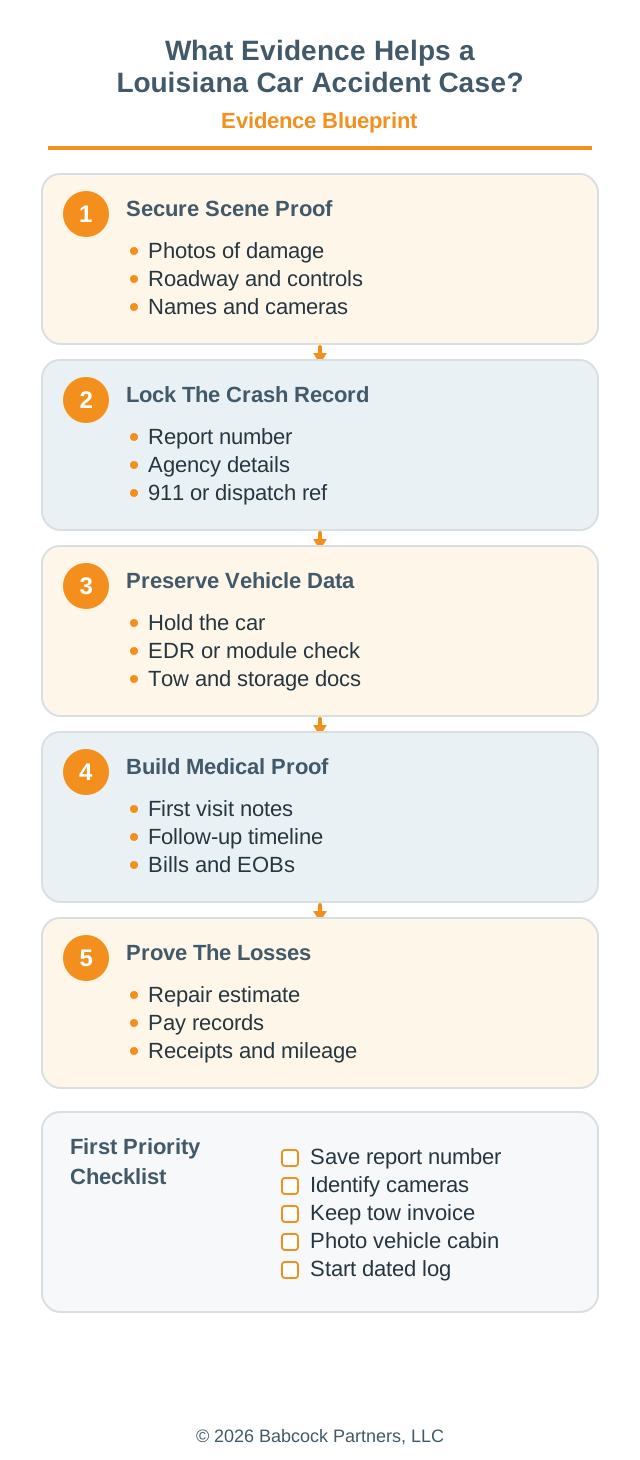
Photographs of the vehicles, debris, roadway markings, signs, signals, and final positions can help reconstruct movement. Take wide views and details when it is safe to do so. A close view of damage without the road around it may not explain lane position or point of impact. Preserve the original files and their dates rather than sending only edited screenshots.
Get witness names and contact information if possible. A brief independent account may become important when drivers disagree about a light, a turn, or a lane change. Nearby businesses and homes may also have video, but retention times vary. Identifying a camera promptly is more useful than assuming the footage will still exist when negotiations begin.
The responding officer’s report can establish parties, time, location, visible damage, and initial statements. It is a starting record, not a complete decision about fault. The Louisiana State Police Traffic Records Unit processes crashes handled by State Police and generally advises waiting fifteen working days before requesting reports or photographs. Its separate instructions for fatal crashes require a sixty-day wait before requesting photographs and direct report requests to the local troop in person. Other agencies have their own processes. Our published guide explains how to obtain a Louisiana crash report.
What the vehicle and digital records can add
If the angle or speed of impact is disputed, the cars themselves may be evidence. Repair estimates, supplement sheets, photographs before teardown, tow records, and storage documents can help show what was damaged and when. A decision to salvage or repair a vehicle can narrow the chance to inspect it. An attorney can assess whether an inspection should be requested before its condition changes.
Some vehicles have an event data recorder. NHTSA describes these devices as recording a short window of technical vehicle and occupant information around a crash. They are not continuous video, and the data available vary by vehicle and event. If phone use, navigation, or rideshare activity is genuinely disputed, the relevant app and phone records may also matter, but they should be sought for a specific issue rather than treated as automatic proof of distraction.
Our Baton Rouge car accident practice page explains the wider claim process. The published article on what to do after a car crash covers immediate steps, while the settlement process guide explains what happens once the records have been assembled.
Medical records and losses answer another question
Scene evidence can help show how a crash happened. It cannot, by itself, establish every injury. Initial visit notes, follow-up care, referrals, prescriptions, and billing records document symptoms and treatment over time. The U.S. Department of Health and Human Services explains that patients generally can inspect and obtain copies of medical and billing records held by covered providers and plans, subject to limited exceptions.
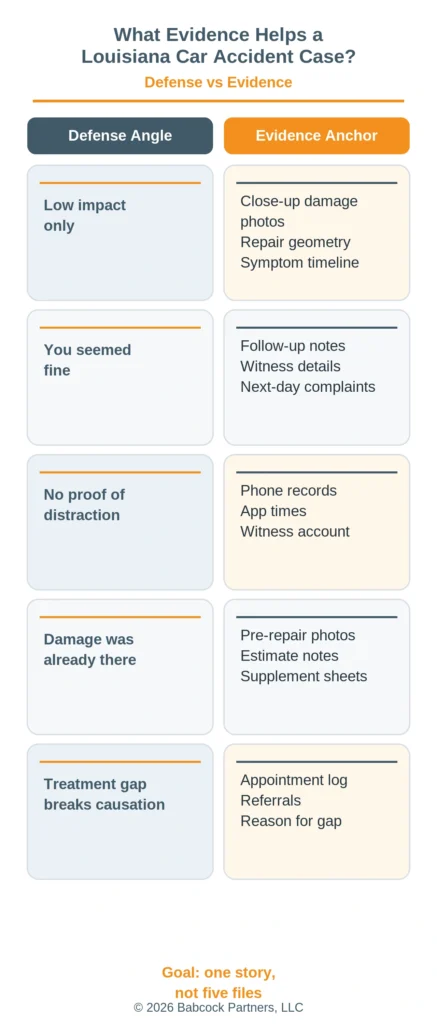
A treatment gap may have an explanation. A later symptom may have appeared only after the first visit. Save appointment requests, messages, work absences, and other dated records that can clarify the sequence. Describe symptoms accurately to clinicians, including improvement. A normal first scan or a short emergency note should not be overstated in either direction.
Loss records are also separate from medical records. Pay stubs, schedules, employer messages, repair estimates, rental and tow receipts, and out-of-pocket expenses can help show what the collision cost. Keep the gross bills and the related insurance or payment records together so a settlement review does not mistake one number for the amount actually owed.
Test each disputed point against the records
If the insurer says the other driver had the green light, look for camera views, witnesses, signal timing, and vehicle positions. If it says the damage was old, compare dated photographs and repair documents. If it disputes the injury, examine the clinical timeline and what the person could do before and after the collision. No single document will answer every challenge.
Louisiana Civil Code article 3493.1 generally provides two years from injury or damage for qualifying delictual actions arising on or after July 1, 2024. Earlier incidents may follow prior law, and special claims or circumstances can have different deadlines. The current text of article 2323 addresses comparative fault and bars recovery when the injured person’s negligence is 51 percent or more. Act 15 of 2025 took effect January 1, 2026, so the accident date matters. These rules make early work on fault evidence important even when treatment is still underway.
Preserve what you can safely, then identify the gaps rather than filling them with guesses. Babcock Injury Lawyers can review the records and deadlines through its contact page.